
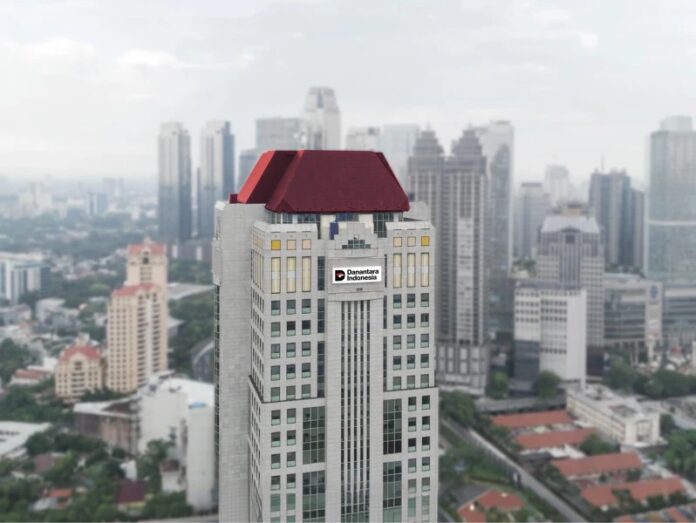
Ecobiz.asia – PT Danantara Investment Management (DIM) and PT Daya Energi Bersih Nusantara (Denera) have selected eight consortium partners to develop the second phase of Indonesia’s waste-to-energy (WtE) programme, covering eight regional projects with a combined investment value estimated at Rp24 trillion–Rp25 trillion (approximately US$1.5 billion).
The selected partners comprise four Indonesian-led consortia, two French-led consortia, and two Chinese-led consortia, each partnering with international technology providers to accelerate the development of waste-to-energy facilities.
The outcome comes after a highly competitive tender process in which Chinese companies dominated participation but secured only two of the eight projects.
Chief Executive Officer of PT Danantara Investment Management, Pandu Sjahrir, said the participation of leading global waste-to-energy companies reflected growing investor confidence in Indonesia’s municipal waste management sector.
“We see this as an opportunity to accelerate technology transfer, build national capabilities, and strengthen Indonesia’s waste management ecosystem,” Pandu said in Jakarta on Monday (July 13, 2026).
Interest in the second procurement round increased sharply compared with the initial phase. According to Denera CEO and DIM Investment Director Fadli Rahman, the number of shortlisted participants rose from 24 in the first round to 85 companies and consortia in the second round.
Most of the shortlisted bidders were Chinese companies or China-led consortia. Of the 85 qualified participants, 68 proposals were submitted to compete for the eight project locations.
Despite the strong Chinese presence, only two China-led consortia were ultimately selected after the evaluation process.
Fadli said the selection was conducted objectively and based on international best practices in procurement and governance.
“All stages of the selection process were conducted objectively, based on good governance principles and international best practices,” he said.
Bidders were assessed based on their track record in developing waste-to-energy projects, financial capability, implementation timeline, commercial competitiveness, risk management strategy, and experience in delivering projects in Indonesia. DIM and Denera also appointed independent technical, legal, and commercial advisers to oversee the evaluation process.
The appointments remain conditional. Each selected consortium will receive a Conditional Letter of Award (CLoA) and must satisfy several requirements before receiving a Final Letter of Award, including completing feasibility studies, establishing joint venture companies, finalising commercial agreements, and securing project financing.
Fadli said each facility is expected to require an investment of between Rp3 trillion and Rp3.5 trillion.
“Across the eight locations, total investment is estimated at around Rp24 trillion to Rp25 trillion,” he said.
He added that all waste-to-energy facilities will adopt European emission standards, similar to those implemented at the Denpasar Raya waste-to-energy project.
The selected partners for the second-phase programme are:
- SUEZ–IAN Consortium (SUEZ Insan Asia) – Medan Raya (France–Indonesia)
- Everbright Cemerlang Energy Consortium (Everbright Harmoni) – Bekasi Regency (China–Indonesia)
- Bumi Biru Indonesia (SUS Indoplas) – Greater Lampung (Indonesia)
- Masa Depan Energi Indonesia (Chandra Waste Energy BGE) – Greater Serang (Indonesia)
- Veolia Environmental Services Asia Pte. Ltd. – Greater Semarang (France)
- Mentari Citra Lestari Consortium (Bakrie Power SUS) – Greater Surabaya (Indonesia)
- MPM–CEVIA Consortium (Mega Power CEVIA) – Greater Bogor 2 (Indonesia)
- Cakra Energi Lestari Consortium (Pertamina NRE–Tianjin CITICC) – Greater Yogyakarta (China–Indonesia)