

Ecobiz.asia — Indonesia is accelerating the development of innovative financing mechanisms to bridge the country’s conservation funding gap, positioning nature protection as a long-term investment rather than a budgetary expense.
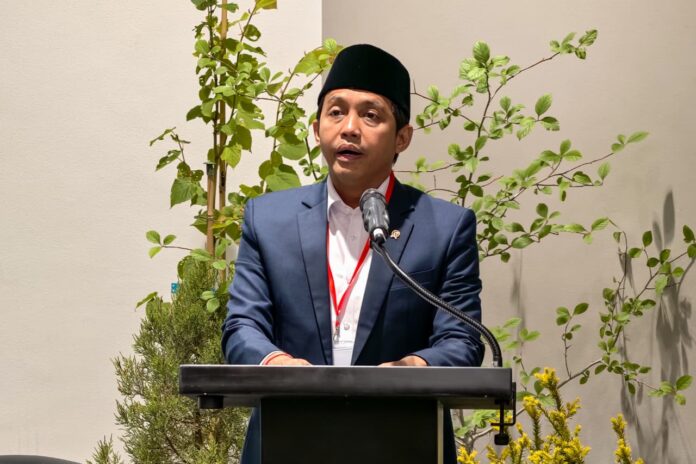
Speaking at the high-level Nature and Finance session during London Climate Action Week 2026 on Tuesday (June 23, 2026), Forestry Minister Raja Juli Antoni outlined Indonesia’s strategy to mobilize private and public capital through carbon credits, biodiversity credits, species conservation bonds, debt-for-nature swaps, ecotourism financing, and investment in national parks.
“Indonesia believes that nature is not merely something to be protected, but a form of development capital that must be managed and invested in sustainably. We therefore need to shift from financing conservation to investing in conservation,” Raja Juli said.
As one of the world’s megadiverse countries, Indonesia aims to ensure that conservation delivers ecological, social, and economic benefits simultaneously, he said. The approach also aligns with President Prabowo Subianto’s agenda to strengthen natural resource protection while advancing inclusive and sustainable economic development.
A key initiative highlighted during the forum is the establishment of the Presidential Task Force for Innovative Financing for National Parks, which is tasked with developing sustainable financing mechanisms to support national park management, endangered species conservation, and ecosystem restoration.
The government is also preparing a range of financing instruments tailored to different conservation needs, including carbon credits, biodiversity credits, species conservation bonds, debt-for-nature swaps, ecotourism financing, and other innovative financial mechanisms.
In addition, Indonesia introduced the One Species, One Company initiative, which encourages private-sector participation in protecting iconic wildlife species such as rhinos, orangutans, elephants, tigers, and birds-of-paradise.
To strengthen conservation financing governance, the government is expanding the use of the Public Service Agency (BLU) model for selected national parks, providing greater financial flexibility to reinvest revenue into conservation activities.
Indonesia is also preparing science-based investment prospectuses for 13 priority national parks. The documents will identify investment opportunities based on ecosystem services, biodiversity conservation, climate mitigation and adaptation, sustainable tourism, watershed protection, and benefits for local communities.
Raja Juli stressed that the long-term success of conservation depends on the active participation of Indigenous Peoples and local communities.
“The knowledge, experience, and centuries-old relationship between local communities and nature are invaluable assets for achieving lasting conservation success,” he said.
He concluded by calling on governments, development institutions, philanthropic organizations, financial institutions, and private investors to strengthen collaboration in building measurable and sustainable conservation financing models.
“No country can close the global nature financing gap alone. It requires collective action, innovative partnerships, and shared responsibility,” he said. ***