
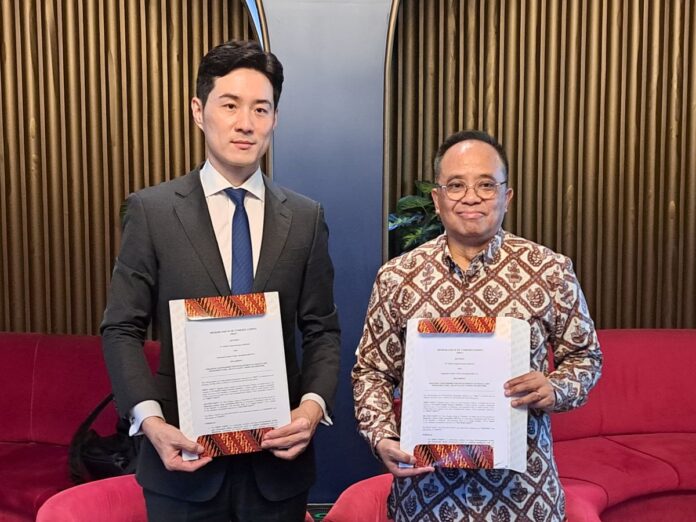
Ecobiz.asia — ESG-IN and the Indonesia Carbon Trade Association have signed a memorandum of understanding (MoU) to accelerate the development of a verified data-driven carbon credit ecosystem in Indonesia.
The agreement was signed in Jakarta on Monday (May 4, 2026) by ESG-IN CEO Brandon Keam and IDCTA Chairman Riza Suarga.
The partnership focuses on digitalizing carbon credit certification and trading processes through the use of digital monitoring, reporting, and verification (MRV), artificial intelligence, and blockchain technologies.
Keam said the collaboration is expected to accelerate the growth of Indonesia’s carbon market while unlocking significant green investment opportunities.
“This collaboration will accelerate the growth of Indonesia’s carbon market while opening up significant green investment opportunities,” he said.
Under the agreement, both parties will work to speed up carbon credit certification and issuance, enhance transaction transparency through blockchain, and expand access to green financing for projects backed by verified ESG data.
ESG-IN will also act as an off-taker for carbon credits and other environmental credits generated by IDCTA member projects, while facilitating access to both domestic and international markets.
Suarga said the partnership marks a strategic step in advancing the digital transformation of Indonesia’s carbon market.
“AI- and blockchain-based digital MRV technologies will help projects in Indonesia meet international standards for emissions reporting and carbon credit certification,” he said.
The collaboration also includes the development of new environmental credit methodologies, capacity building for businesses and government institutions, and policy advocacy to support a transparent and sustainable carbon market.
Beyond carbon credits, the partnership will explore the development of plastic credits and ESG Action Credits as part of broader environmental economic instruments.
Both parties expect the collaboration to strengthen the integrity of Indonesia’s carbon market, support the country’s Nationally Determined Contribution (NDC) targets, and contribute to achieving net zero emissions by 2060. ***