
Ecobiz.asia — Ports across the Asia Pacific are accelerating efforts to develop hydrogen and e-fuel ecosystems through cross-sector collaboration, positioning the region as a key proving ground for energy transition strategies, according to a report by Accelleron.
In its latest report, Asia Pacific as the Proving Ground for Overcoming Shipping’s Carbon-Neutral Fuel Deadlocks, the Switzerland-based technology firm highlights how ports are aligning demand from energy, industry, and shipping sectors to support early-stage hydrogen and e-fuel markets.
The report notes that while vessel technology has advanced rapidly, including the deployment of dual-fuel ships capable of using methanol and ammonia, fuel production remains limited due to fragmented demand, high upfront investment costs, and infrastructure challenges.
Accelleron President of Medium- and Low-Speed Division Christoph Rofka said cross-sector coordination is essential to overcoming these barriers.
“Where e-fuel projects succeed, energy and multiple hard-to-abate industries move together. Combining demand creates contracts large enough to start building, shares risk so projects become insurable, and allows developers to build infrastructure once instead of duplicating it,” he said in a statement as quoted on Friday (May 1, 2026).
According to the report, major ports such as Singapore, Yokohama, Busan, and Shanghai are advancing pilot projects for green hydrogen and e-fuels, driven by national decarbonization strategies and energy security goals rather than shipping demand alone.
Across the region, ports are developing ammonia and methanol projects, establishing safety frameworks, and strengthening fuel-handling capabilities. Early production is being supported by demand from land-based sectors such as power generation, chemicals, and heavy industry, enabling infrastructure and standards to develop ahead of large-scale maritime adoption.
The study also identifies the emergence of a regional supply-demand architecture, with ports taking on roles as producers, connectors, receivers, or export hubs based on their respective strengths.
Key trade corridors, including the Australia–Singapore–China iron ore route, are seen as potential pathways for early e-fuel deployment, linking industrial demand, shipping activity, and port readiness. Meanwhile, the Singapore–Rotterdam route is highlighted as a growing connection between Asia Pacific supply and European demand centers.
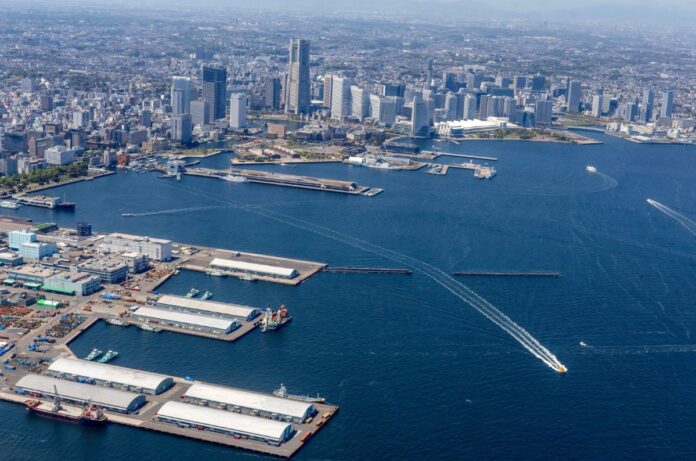
The Port of Yokohama is cited as a leading example of cross-sector implementation. As part of Japan’s Carbon Neutral Port initiative, the port is integrating national policy, local government coordination, and industry collaboration.
Yokohama has launched 145 public-private partnership projects covering hydrogen, ammonia, and methanol supply chains, as well as port decarbonization measures such as shore power and electrification.
Director for Carbon Neutral Port Promotion at the City of Yokohama, Hitoshi Nakamura, said public support plays a crucial role in enabling early-stage development.
“Public support is critical to enabling early development, especially when we are working across multiple sectors. This structured, public-private, cross-sector approach is proving effective in accelerating infrastructure and market development,” he said.
The report concludes that Asia Pacific’s coordinated approach is helping unlock early investment and build the foundations of a future e-fuel market, even as maritime demand and policy incentives continue to evolve. ***