
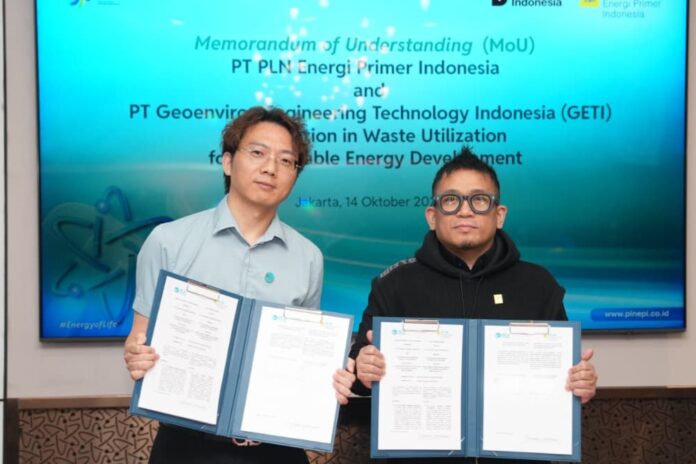
Ecobiz.asia – Indonesia’s PT PLN Energi Primer Indonesia (PLN EPI) has partnered with PT Geoenviron Engineering Technology Indonesia (GETI), a subsidiary of China’s Beijing Geoenviron Engineering & Technology Inc. (BGE), to explore converting waste into energy, including through refuse-derived fuel (RDF) and waste-to-energy (WtE) technologies.
The two companies signed a memorandum of understanding (MoU) to assess waste characteristics, identify potential feedstock sources and evaluate suitable conversion technologies. The initial assessment will also examine supply chain development, business models and the potential construction of supporting facilities, subject to technical, commercial and regulatory considerations.
PLN EPI Biomass Director Hokkop Situngkir said the agreement provides an initial framework for cooperation in developing waste utilization as a resource for sustainable energy.
“The signing of this memorandum of understanding is an important and strategic first step. It provides a legal foundation and a shared commitment to strengthen collaboration between PLN Energi Primer Indonesia and Geoenviron Engineering Technology in utilizing waste to develop sustainable energy,” Hokkop said, according to a statement issued on Monday (Oct. 19, 2026).
PLN EPI is involved in developing and utilizing bioenergy to support Indonesia’s energy transition, while GETI provides environmental technology and services, including waste management, WtE and RDF solutions.
GETI Technical Director Li Chenyi said the company hoped the cooperation would progress from preliminary assessments to project implementation.
“We at GETI are very pleased and grateful for the opportunity to work with PLN EPI. We hope this project and subsequent projects can move toward implementation soon,” Li said.
GETI Business Development Manager Alif Zulviqar Syahroni said the partnership was also in line with the company’s efforts to establish collaborations with Indonesian state-owned enterprises. The companies would further assess identified opportunities to determine which initiatives could be pursued jointly. ***