

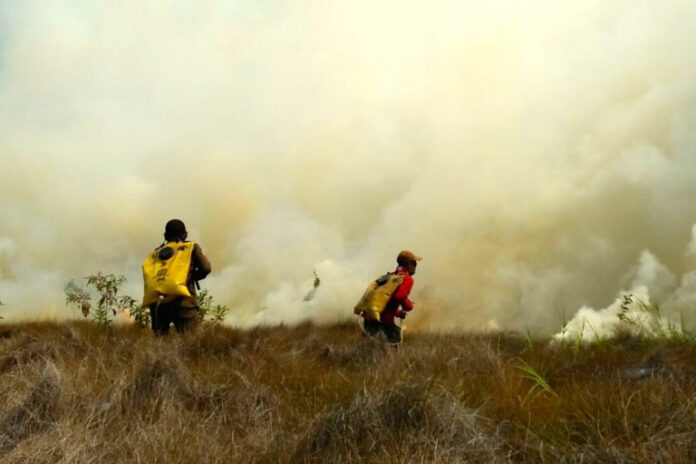
Ecobiz.asia – Singapore-listed palm oil producer First Resources Limited says many fire hotspots detected near its concessions in West Kalimantan were outside its operating boundaries, while reporting that some fires originating beyond its concessions had spread into areas under its management.
On Oct. 5, Greenpeace Indonesia, Greenpeace Malaysia and Indonesian environmental organization Pantau Gambut published an investigation examining fire and smoke sources associated with plantation operations between August and Oct. 1, 2026. The report identified more than 20 palm oil, pulp and sugar companies connected to areas where fires and smoke were detected.
The companies included plantation operators associated with Singapore-listed First Resources and Bumitama Agri, as well as privately held First Borneo Plantations, which has historical corporate links to Singapore.
In a statement dated Oct. 15, First Resources outlined its fire prevention and response measures, saying that satellite-detected hotspots within or near concession boundaries do not, by themselves, establish the origin of a fire or determine responsibility for it.
First Resources said it had identified hotspots near its West Kalimantan concessions and that many were found, upon verification, to be outside its operating boundaries. The company said areas near concession boundaries, community-owned land and unmanaged areas faced higher fire risks.
“While the Group’s on-site firefighting teams responded as vigorously as possible to manage and contain these incidents, the fires originating outside the concession were, in some cases, too massive and fast-spreading to be fully contained,” the company said.
First Resources cautioned that satellite-detected hotspots within or near concession boundaries do not, by themselves, establish the origin of a fire or determine who was responsible. It said identifying the cause requires ground verification and an assessment of the timing and spread of fires.
The company attributed the heightened fire risk in 2026 partly to prolonged dry conditions associated with severe El Niño conditions. It also cited burning for traditional land preparation on surrounding land as a potential source of fires, warning that drought could increase the risk of flames spreading uncontrollably.
Fire Prevention and Response Measures
First Resources said it enforces a zero-burning policy across its planting activities and operates an integrated fire management program covering prevention, preparedness, response and recovery.
Its monitoring system includes daily satellite tracking, Indonesia’s official SiPongi forest and land fire monitoring system, drone surveillance and ground patrols. The company also said it monitors rainfall, soil moisture and peat water-table levels at relevant plantations to identify dry conditions and mitigate fire risks.
In response to fires in the region, the company said its firefighting teams had been placed on standby near concession boundaries and coordinated with neighboring companies where applicable.
First Resources also reported distributing 17 sets of water pumps to villages around its operating units in West Kalimantan to support firefighting efforts. It said it had supplied thousands of masks to the education offices of Ketapang and Kayong Utara for distribution to local schools.
The company said it would continue coordinating with government authorities, communities and other stakeholders to control fires and reduce the risk of further spread.
The statement did not identify the specific fire incidents or concession locations underlying its claims that many hotspots were outside its operating boundaries. The company’s response also did not provide a site-by-site account of the incidents examined in the environmental organizations’ report. ***