
Jakarta Strengthens Waste Infrastructure and Roadmap to Achieve 2029 Zero Waste Target

MORE ARTICLES

Ecobiz.asia – Jakarta is stepping up efforts to build a more sustainable waste management system, expanding infrastructure and finalizing its roadmap toward a zero-waste-to-landfill vision by 2029. The plan aims to cut the capital’s reliance on landfills and boost local waste processing capacity across all levels.

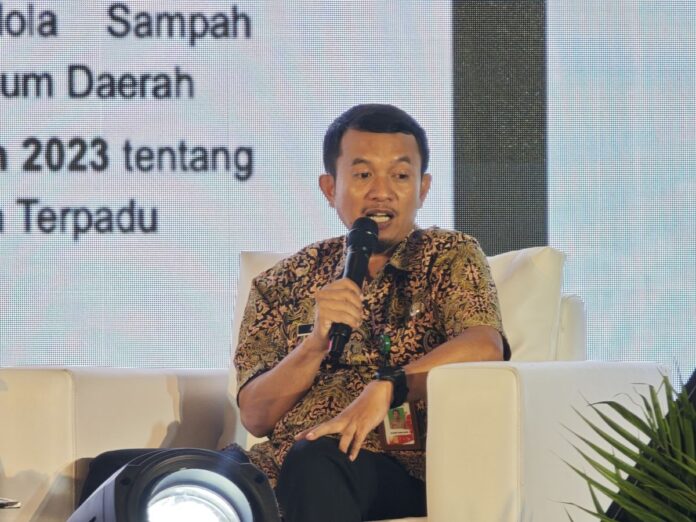
Adib Awaludin, Head of Waste Reduction at the Jakarta Environmental Agency (DLH DKI Jakarta), said the city is implementing a three-tier strategy covering upstream, midstream, and downstream management.

“Our approach starts from the source — raising public awareness on waste reduction, strengthening local processing facilities, and improving landfill efficiency,” Adib said during the Multi-Stakeholder Dialogue on Plastic, Climate and Biodiversity Nexus Forum hosted by Ministry of Environment and WWF Indonesia, Tuesday (Oct. 28, 2025)

Read also:  Indonesia Looks to Denmark to Accelerate Green Jobs Development

At the upstream level, DLH focuses on behavioral change through its “Kurangi, Pilah, Olah” (Reduce, Sort, Process) campaign, shifting from the old mindset of merely disposing waste properly to minimizing it at the source. The city has also established 362 maggot houses that process organic waste using bioconversion technology.

In the midstream phase, Jakarta operates 22 TPS 3R (Reduce, Reuse, Recycle) facilities, with several more under development. It also manages a Water Body Waste Management Unit (UPSBA) tasked with cleaning rivers, reservoirs, and canals to prevent plastic pollution from entering the sea. “We apply the Zero In, Zero Out principle — preventing waste from entering waterways and ensuring none escapes to the ocean,” Adib said.

Read also:  Indonesia Pushes High-Integrity Jurisdictional REDD+ Carbon Market Framework

At the downstream level, the Bantar Gebang Integrated Waste Management Unit — now managed as a regional public service agency (BLUD) — is being upgraded with new facilities, including Refuse-Derived Fuel (RDF) plants capable of processing up to 2,000 tons of waste per day.

DLH is also collaborating with state utility PLN to produce solid alternative fuel (BPJP) for industrial boilers. A pilot waste-to-energy (PLTSA) plant, developed with the National Research and Innovation Agency (BRIN), is already operating with a capacity of 100 tons per day.

Read also:  Chinese Firms Dominate Interest in Danantara Waste-to-Energy Power Projects

Adib added that Jakarta’s 2024–2029 Waste Management Roadmap provides a clear framework based on baseline data, defined roles, and cross-sector collaboration.

WWF Indonesia, he noted, has been a key partner in designing the roadmap, conducting feasibility studies, and piloting community-based waste programs in North Jakarta.

“With shared responsibility between government, business, and the public, we are building a circular waste system where reduction, reuse, and recycling happen before waste reaches the landfill,” Adib said. “Our goal is simple — zero waste to landfill by 2029.” ***

LATEST STORIES

MORE ARTICLES

Indonesia Launches SIGN SMART Robust to Strengthen Transparency of National Carbon Emissions Data

Ecobiz.asia — Indonesia’s Ministry of Environment/Environmental Control Agency (KLH/BPLH) has launched a new national greenhouse gas inventory platform called SIGN SMART Robust to improve...

Indonesia Drafts Waste Sector Carbon Trading Rules, Prepares National Roadmap

Ecobiz.asia – Indonesia’s Ministry of Environment/Environmental Control Agency (KLH/BPLH) is preparing regulations and a roadmap for carbon trading in the waste sector as part...

Indonesia to Launch First International FOLU Carbon Credit Sale in July 2026, Targeting Over 30 Million Tons

Ecobiz.asia — Indonesia is preparing to launch its first international sale of forest and other land use (FOLU) carbon credits in early July 2026,...

Indonesia Advances Energy Carbon Market With 120 Projects in Pipeline

Ecobiz.asia — Indonesia’s Ministry of Energy and Mineral Resources is preparing to accelerate the country’s carbon market development after identifying around 120 energy-sector carbon...

UK PACT Supports Indonesia’s State Railway Operator KAI in Net-Zero Decarbonisation Roadmap

Ecobiz.asia — Indonesia’s state railway operator PT Kereta Api Indonesia (KAI) has unveiled a long-term decarbonisation roadmap with support from the UK government through...

TOP STORIES

Pertamina dan BRIN Luncurkan Alat Pengubah Sampah Plastik Jadi Solar di Bantul

Ecobiz.asia – Pertamina melalui Pertamina Foundation bersama Badan Riset dan Inovasi Nasional (BRIN) dan Pemerintah Kabupaten Bantul meluncurkan alat pirolisis multikondensor Gen 5.0 (Faspol...

CBG Jadi Solusi Transisi dari LNG, Manfaatkan 130 Juta M3 Limbah Sawit

Ecobiz.asia - PT PLN Energi Primer Indonesia (PLN EPI) mendorong pengembangan Compressed Biomethane Gas (CBG) berbasis limbah cair kelapa sawit atau Palm Oil Mill...

Tobat Ekologis, Suatu Pendekatan Ekoteologi

Oleh: Saiful Latief, M.Si (Pranata Humas Ahli Muda, Direktorat Inventarisasi GRK dan MPV, Deputi Bidang Pengendalian Perubahan Iklim dan TKNEK, Kementerian Lingkungan Hidup) Ecobiz.asia -...

Indonesia Launches SIGN SMART Robust to Strengthen Transparency of National Carbon Emissions Data

Ecobiz.asia — Indonesia’s Ministry of Environment/Environmental Control Agency (KLH/BPLH) has launched a new national greenhouse gas inventory platform called SIGN SMART Robust to improve...

KLH Luncurkan SIGN SMART Robust, Perkuat Transparansi Data Emisi Karbon Nasional

Ecobiz.asia – Kementerian Lingkungan Hidup/Badan Pengendalian Lingkungan Hidup (KLH/BPLH) meluncurkan Sistem Inventarisasi Gas Rumah Kaca Nasional (SIGN SMART Robust) untuk memperkuat kualitas, transparansi, dan...