
Ecobiz.asia — Indonesia’s Ministry of Forestry has expanded opportunities for public participation in forestry carbon trading following the issuance of Ministerial Regulation (Permenhut) No. 6/2026.
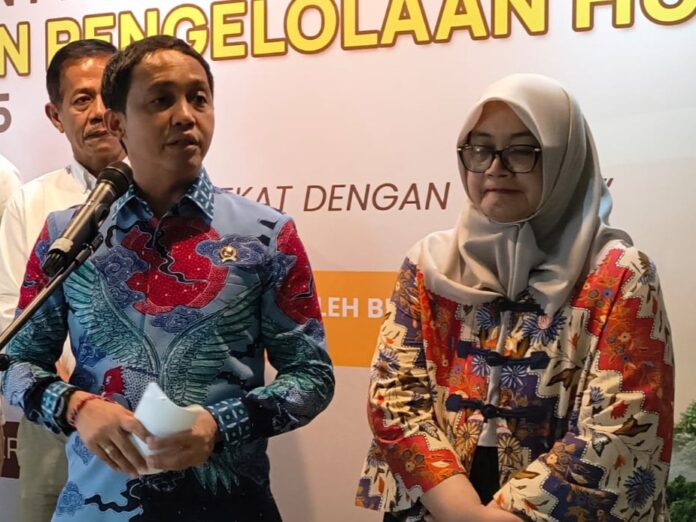
Forestry Minister Raja Juli Antoni said the regulation not only strengthens carbon market governance but also ensures broader community involvement in the green economy.
“This regulation expands participation in carbon trading. It is not limited to corporations, but also includes social forestry groups, indigenous communities, private forest owners, and environmental service providers,” he said on Wednesday (April 15, 2026).
The regulation, which governs procedures for carbon trading through greenhouse gas (GHG) emission offset schemes in the forestry sector, is seen as a key step in advancing Indonesia’s green economy.
“The issuance of this regulation is a concrete step to strengthen governance in forestry carbon trading, making it more credible, transparent, and inclusive. We want to ensure that carbon economic benefits not only contribute to national climate targets but also deliver tangible impacts for communities and forest sustainability,” he added.
Permenhut No. 6/2026 is a follow-up to Presidential Regulation No. 110/2025 on carbon economic value and emissions control, signed by President Prabowo Subianto. The policy aims to reinforce the implementation of carbon pricing instruments while supporting Indonesia’s emission reduction targets.
The regulation introduces key reforms, including a clearer roadmap covering emission reduction targets, project areas, and implementation strategies aligned with national climate commitments.
From a regulatory standpoint, it provides greater legal certainty for market participants. All carbon units must undergo standardized validation and verification by independent bodies and be recorded in the national registry system to prevent double counting.
The government has also streamlined business processes, with document submission, assessment, and certification conducted electronically within defined service timelines to improve efficiency and transparency.
International carbon trading is also regulated, requiring government approval to ensure alignment with Indonesia’s emission reduction targets.
Project developers are required to comply with environmental and social safeguards, including community engagement, protection of indigenous rights, and biodiversity conservation.
The ministry noted that conservation areas also hold significant potential for carbon trading through afforestation, reforestation, and revegetation (ARR) activities across approximately 1.27 million hectares of deforested and degraded land, with carbon sequestration potential estimated at 4.5–50 tons of CO2 equivalent per hectare per year. ***