
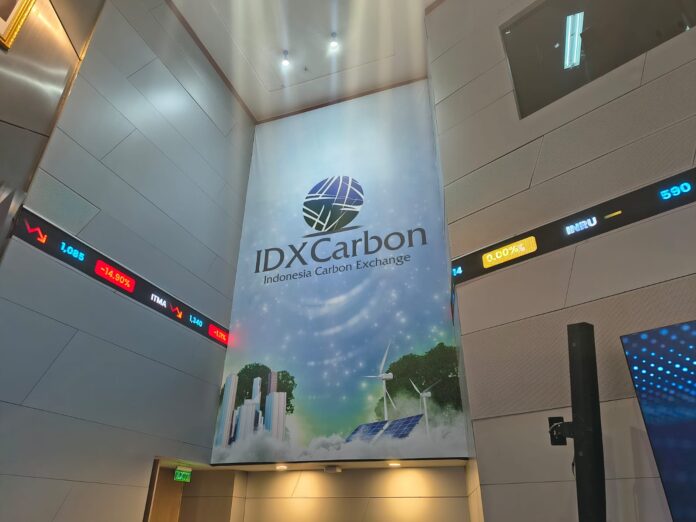
Ecobiz.asia – The Indonesia Stock Exchange (IDX) is preparing a proposal for an incentive and disincentive scheme to encourage companies to trade carbon units through the exchange rather than through direct transactions outside the exchange.
IDX Development Director Iding Pardi said the proposal would be submitted to the government, with carbon transactions conducted through the exchange receiving incentives while direct transactions outside the exchange could face disincentives.
“There needs to be an incentive and disincentive mechanism for carbon transactions. Transactions through the exchange should receive incentives, while those outside the exchange should face disincentives. We are working on a proposal to submit to the government,” Iding said in Jakarta on Friday (Sept. 18, 2026).
One incentive being considered is a lower state levy, or Non-Tax State Revenue (PNBP), for carbon transactions conducted through the exchange.
Iding said there is currently no carbon tax applicable in this context, with the government levy taking the form of PNBP. IDX hopes the PNBP imposed on carbon transactions through the exchange can be set below the levy applicable to direct carbon transactions outside the exchange.
“The hope is that the PNBP imposed on carbon transactions through the exchange will be lower than for transactions conducted outside the exchange,” Iding said.
According to Iding, carbon trading through the exchange offers advantages in terms of transparency and regulatory oversight.
Transactions conducted through the exchange are recorded and visible, allowing the government and regulators to monitor the market more easily and obtain a more comprehensive picture of Indonesia’s carbon market potential.
“Because the exchange has many advantages, including transparency. Everything is visible, oversight is easier, and the government or regulators can see the overall potential of our carbon market,” Iding said.
By contrast, direct carbon transactions outside the exchange are more difficult to monitor because oversight depends on reports submitted by the parties involved.
“If they do not report the transactions, the government may not know that a carbon sale has taken place,” Iding said.
IDX also sees exchange-based trading as a way to strengthen carbon price discovery. Prices formed through the exchange can better reflect supply and demand, while transactions outside the exchange generally rely on direct negotiations between buyers and sellers.
“We will encourage and propose a scheme for disincentives because it also provides better price discovery, as prices are based on supply and demand, whereas outside the exchange it is simply negotiated between the parties,” Iding said.
Through the proposed scheme, IDX aims to encourage market participants to use the exchange for carbon transactions while reducing reliance on direct trading outside the exchange. ***