
Ecobiz.asia — Singapore and Indonesia have made significant progress in negotiations on a bilateral carbon credit partnership under Article 6 of the Paris Agreement, as both countries seek to expand cross-border carbon trading and climate finance cooperation.
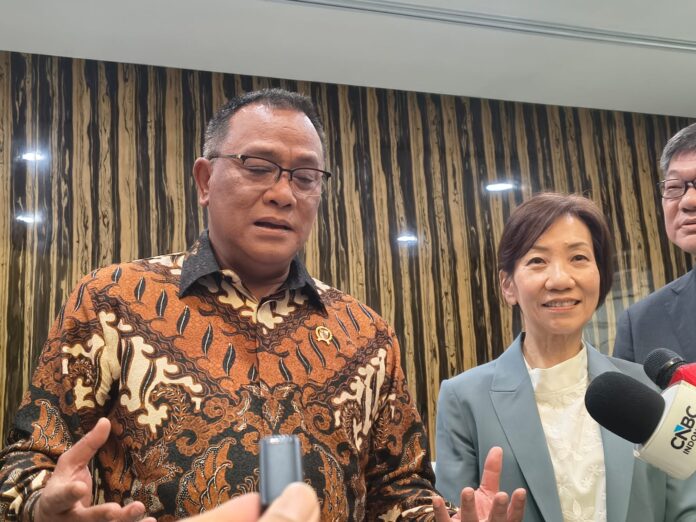
Singapore’s Minister for Sustainability and the Environment, Grace Fu, said discussions with Indonesia’s Ministry of Environment are progressing well and could soon reach a conclusion.
“We hope to bring good news to you very soon. We have made a lot of progress in the negotiation process,” Fu told Ecobiz.asia reporter after signing an environmental cooperation memorandum of understanding with Indonesia in Jakarta on Monday (June 29, 2026).
If concluded, Indonesia would become the latest Southeast Asian country to establish a bilateral carbon credit framework with Singapore. The city-state signed an Article 6 implementation agreement with Thailand in 2025 and another with the Philippines in April 2026, allowing the transfer of internationally verified carbon credits while channeling climate finance into emissions reduction projects.
Indonesia’s Minister of Environment, Moh Jumhur Hidayat, said the government remains open to carbon market cooperation with all potential partner countries, including Singapore.
“I have also heard that Singapore is ready. Many investors from Singapore have been on standby to participate in carbon trading,” Jumhur said.
Indonesia is preparing to launch its Carbon Unit Registry System (SRUK) on July 9, 2026, a milestone expected to pave the way for the country’s first international carbon trading transactions under Presidential Regulation No. 110 of 2025 on Carbon Economic Value.
Jumhur stressed that Indonesia’s carbon market will prioritize equitable benefit-sharing with local and Indigenous communities that protect forests and other carbon-rich ecosystems.
“The most important benefit must go to local communities,” he said. “Carbon benefit-sharing should not become a speculative business. We want to ensure that the people who protect forests receive a fair share because they are the ones safeguarding these ecosystems.”
He added that ensuring fair and transparent benefit-sharing would strengthen environmental stewardship while enhancing the credibility and value of Indonesian carbon credits in international markets. ***