

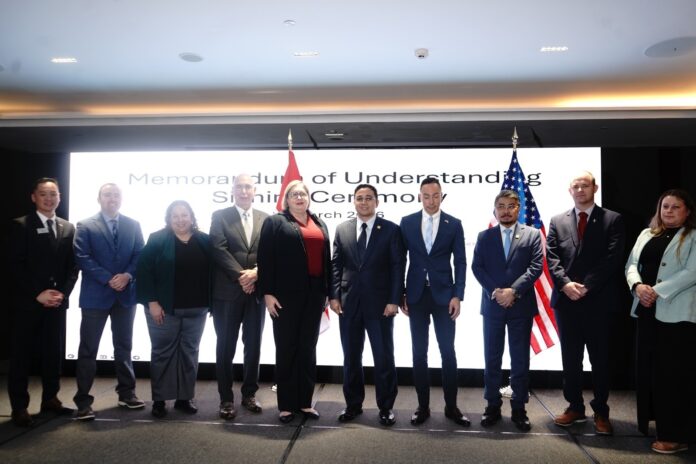
Ecobiz.asia — PT Pertamina New & Renewable Energy (Pertamina NRE) has signed a memorandum of understanding (MoU) with the US Grains & BioProducts Council to strengthen collaboration on bioethanol development in Indonesia through joint studies and knowledge exchange.
The partnership focuses on enhancing technical and institutional capacity, including the adoption of global best practices to support Indonesia’s bioethanol ecosystem and the potential rollout of E10 ethanol-blended fuel.
Pertamina Vice President Director Oki Muraza said the collaboration is part of efforts to strengthen national capabilities through global learning.
“Bioethanol represents a convergence between energy security and sustainability for Indonesia. Through this cooperation, we aim to learn from international best practices, including ecosystem development, feedstock diversification, regulatory frameworks, and the implementation of ethanol-blended fuels,” he said in a statement as quoted Friday (April 3, 2026).
Under the agreement, both parties will conduct joint assessments on strengthening the bioethanol supply chain and infrastructure, covering technical, commercial, and regulatory readiness aspects.
The collaboration will also include technical training, expert exchanges, and the organization of forums and workshops.
Pertamina NRE President Director John Anis said the partnership aligns with the company’s commitment to accelerating the energy transition through knowledge-based strategic collaboration.
“This collaboration provides a platform to strengthen capabilities through joint studies, training, and expertise exchange, supporting the development of an adaptive and sustainable bioethanol ecosystem in Indonesia,” he said.
Meanwhile, US Grains Council Chairman Mark Wilson said the MoU is focused on implementation through knowledge sharing and system readiness.
“This partnership will drive knowledge exchange in ethanol production and supply chains, strengthen technical aspects and market development, and support Indonesia’s readiness for ethanol-based fuels,” he said.
The cooperation also covers domestic capacity development through technology adoption, operational optimization, and improved understanding of production management and feedstock diversification, as well as support for market development and public communication strategies on ethanol-blended fuels. ***