
Ecobiz.asia – Indonesia is inviting domestic and international investors to develop carbon projects in Papua, positioning the forest-rich region as a key destination for community-based carbon investment under the country’s expanding carbon market framework.
The government said Papua’s vast tropical forests offer significant potential for nature-based climate solutions, supported by strengthened carbon market regulations, efforts to secure Indigenous land rights, and the development of investment models designed to deliver benefits to local communities.
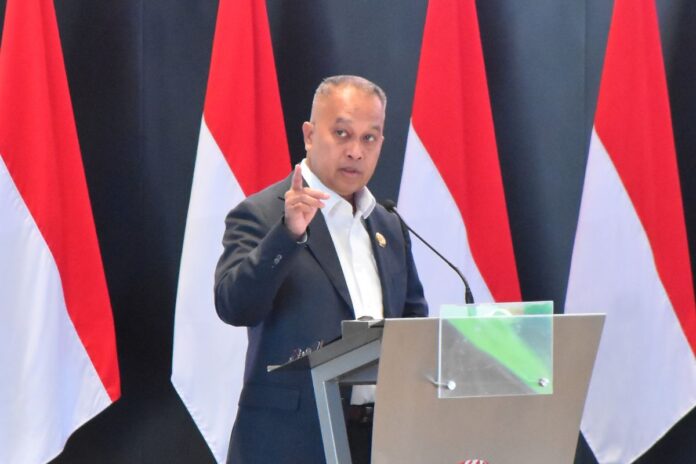
Velix Wanggai, Chairman of the Executive Committee for the Acceleration of Papua’s Special Autonomy Development, said carbon development has become one of the government’s strategic priorities for accelerating sustainable economic growth in Papua.
Speaking at the National Carbon Market Readiness and Corporate Carbon Governance Strategic Forum in Jakarta on Tuesday (July 14, 2026), Wanggai said the initiative aligns with Indonesia’s climate commitments and the implementation of Presidential Regulation No. 110/2025 on Carbon Economic Value Instruments.
“Papua has enormous potential for carbon projects. We want carbon policy to become a game changer that brings together government, investors, businesses, international organizations, and Indigenous communities to build a green economy in Papua,” he said.
Wanggai said the government is not only strengthening the regulatory framework but is also mapping Indigenous ownership of land, forests, and coastal areas across Papua to provide greater legal certainty for local communities and clarify benefit-sharing arrangements.
The mapping forms part of the government’s broader Papua development roadmap and is intended to create a transparent and sustainable investment framework while ensuring Indigenous peoples remain central beneficiaries of carbon projects.
In parallel, the government is preparing social mapping, business models, and collaborative mechanisms involving provincial governments, Indigenous communities, private companies, and investors.
One of the main opportunities for community-based carbon projects, Wanggai said, lies in Indonesia’s Social Forestry programme. Papua has approximately 1.86 million hectares allocated for social forestry, providing significant potential for community-managed carbon initiatives.
The government is also preparing a series of pilot projects across Papua’s six provinces as part of an early implementation programme. Wanggai said authorities are seeking partnerships with carbon market associations, domestic and international companies, and local governments to accelerate project development.
“We invite businesses and investors to work with us in developing carbon projects in Papua. Our goal is not simply to attract investment, but to build a carbon ecosystem that benefits Indigenous communities while contributing to Indonesia’s emission reduction targets,” he said. ***