
Ecobiz.asia — Indonesia, Malaysia and Thailand have reaffirmed their commitment to strengthening regional cooperation on climate resilience and environmental sustainability, with a renewed focus on tackling cross-border environmental challenges through concrete projects and green technology initiatives.
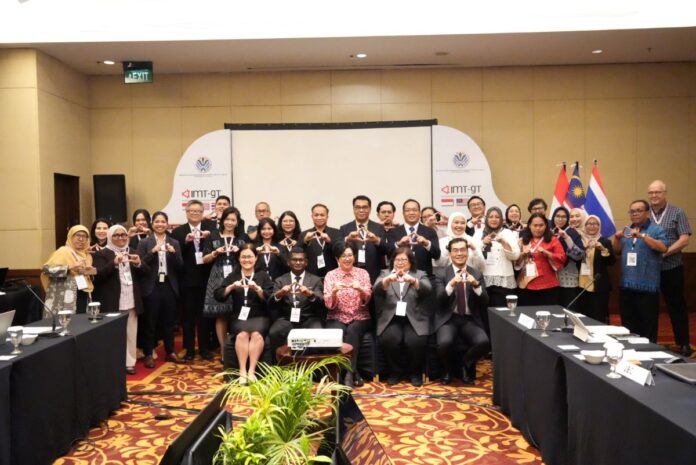
The commitment was highlighted during the opening of the 6th Working Group on Environment Meeting of the Indonesia-Malaysia-Thailand Growth Triangle (IMT-GT) in Medan, North Sumatra, on Thursday (June 18, 2026).
The meeting brought together government representatives and stakeholders from the three countries to discuss collaborative solutions to environmental issues ranging from waste management and marine protection to climate adaptation and circular economy initiatives.
Indonesia’s Ministry of Environment and Environmental Control Agency (KLH/BPLH), which hosted the meeting, emphasized the growing importance of regional collaboration as climate-related challenges increasingly transcend national borders.
“IMT-GT has become an important platform for strengthening regional cooperation, not only in economic development but also in environmental sustainability and climate resilience. Environmental challenges now extend beyond national boundaries, requiring stronger coordination and collective action,” said Rosa Vivien Ratnawati, Secretary of the Ministry of Environment and Principal Secretary of the Environmental Control Agency.
Indonesia presented three key priorities during the meeting: aligning subregional cooperation with ASEAN and global environmental targets, implementing concrete projects in waste management, biodiversity conservation and marine protection, and expanding collaboration with local governments, businesses, academia and youth groups.
Laksmi Widyajayanti, Senior Advisor to the Minister for Food Resources, Natural Resources, Energy and Environmental Quality, welcomed the adoption of the meeting’s annotated agenda, describing it as an important step toward ensuring discussions translate into actionable outcomes across the subregion.
As part of efforts to promote practical cooperation, participating countries showcased several environmental initiatives and green innovation projects.
Thailand presented plans to conduct marine oil spill response training, while Malaysia introduced its battery passport system aimed at improving traceability and recycling of electric vehicle batteries. Indonesia highlighted the integrated waste management facility operated by PT Sumatera Deli Lestari Indah as an example of environmentally responsible industrial practices.
Malaysia also expressed appreciation for Indonesia’s leadership in hosting the meeting.
“We appreciate Indonesia’s willingness to host this meeting. We hope the discussions will generate practical recommendations that can be followed up by each member country,” said P Jeevananth A/L Paliah, Chair of the IMT-GT Working Group on Environment from Malaysia’s Ministry of Natural Resources and Environmental Sustainability.
Closing the session, Rosa called on delegates to strengthen their shared commitment to environmental protection across the IMT-GT subregion.
“Let us use this meeting as an opportunity to reaffirm our commitment, not only as member countries, but as a community bound by a shared geography, history and future,” she said.
The ministry said cooperation with the Asian Development Bank (ADB) and the ASEAN Secretariat would help translate the meeting’s outcomes into tangible green projects that deliver environmental and social benefits across the region. ***