

Ecobiz.asia – The Indonesian government will restrict the implementation of carbon projects at Way Kambas National Park (TNWK) to designated utilization zones, as part of a broader plan to develop a pilot blended finance scheme for conservation funding.
Forestry Minister Raja Juli Antoni said the initiative is designed to combine multiple financing instruments, including biodiversity bonds, voluntary carbon market credits, and conservation-based ecotourism, to support biodiversity protection while improving livelihoods of communities surrounding the park.
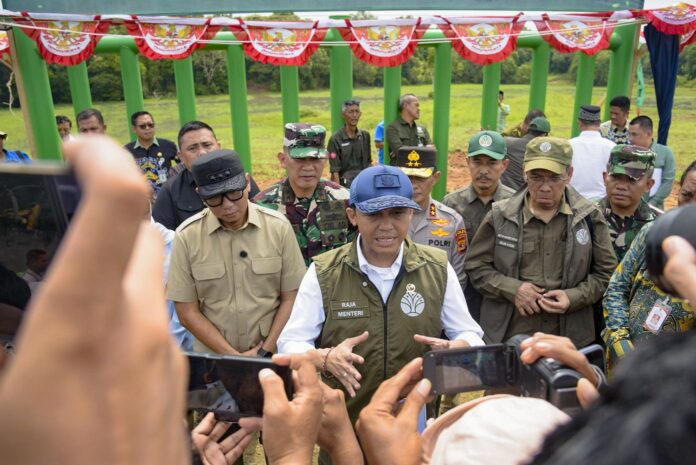
“In designing this project, we aim to enhance both community welfare and the invaluable biodiversity of Way Kambas,” Raja Juli said during an Eid gathering with village leaders near the park on Thursday (March 26, 2026).
He said the initiative reflects the government’s effort to address persistent funding gaps in conservation management, which has long relied on the state budget, while pressures such as encroachment, poaching, forest fires, and human–wildlife conflict continue to escalate.
According to Raja Juli, President Prabowo Subianto has placed particular attention on Way Kambas, especially in safeguarding the habitat and population of Sumatran elephants and resolving human–elephant conflicts.
“The President’s commitment is to protect elephant populations and permanently resolve human–elephant conflict,” he said.
As part of the strategy, the government has established a Task Force on Innovative Financing and Management of National Parks, involving multiple stakeholders, including the private sector. The task force is chaired by Mari Elka Pangestu, with Raja Juli serving as deputy chair.
Way Kambas was selected as the pilot project due to its high ecological value as a habitat for key endangered species, including the Sumatran elephant, Sumatran rhinoceros, and Sumatran tiger.
Under the carbon credit scheme, companies will be able to offset emissions by purchasing credits generated from conservation and forest restoration activities, with proceeds reinvested into park management and ecosystem recovery.
The government is also exploring biodiversity credits, a market-based instrument that assigns economic value to conservation outcomes, enabling investors to fund biodiversity protection projects in exchange for certified ecological benefits.
Raja Juli emphasized that carbon project implementation within conservation areas will remain limited to utilization zones in accordance with prevailing regulations. Any zoning adjustments will be temporary and aimed at strengthening wildlife habitats before being restored to their original function.
In addition, the initiative includes the development of sustainable ecotourism to create jobs and increase local incomes.
Going forward, the government expects the financing model to be replicated across other national parks to strengthen conservation efforts while promoting environment-based economic development.
“We hope communities around Way Kambas will be the first to benefit from this innovation, not the last,” said Mari Elka Pangestu. ***