
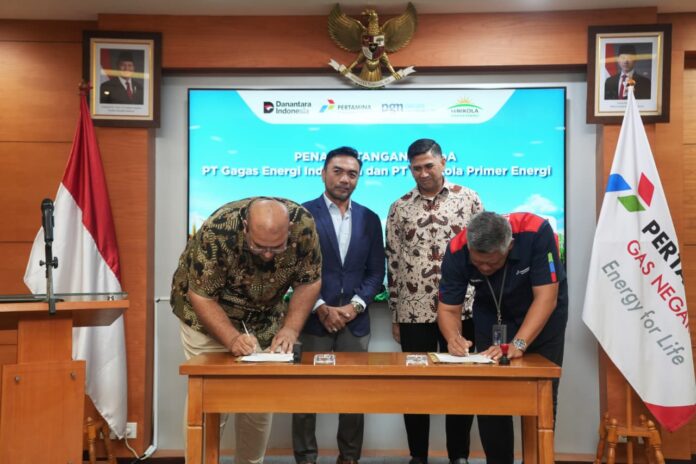
Ecobiz.asia — Indonesia’s state gas distributor PT Perusahaan Gas Negara Tbk (PGN), through its unit PT Gagas Energi Indonesia, has signed a preliminary agreement with PT Renikola Primer Energi to develop the supply of compressed biomethane gas (CBG) in North Sumatra.
Under the Heads of Agreement (HoA), Renikola will supply CBG to PGN Gagas as part of efforts to diversify gas sources and support Indonesia’s transition to cleaner energy, particularly in regions with abundant organic waste from agriculture and livestock.
PGN Strategy and Business Development Director Mirza Mahendra said the agreement reflects the gas subholding’s commitment to expanding gas supply from renewable sources.
“The signing of this HoA is a concrete step in utilising gas supply derived from renewable energy such as biomethane,” Mirza said in a statement, Tuesday (Dec. 23, 2025).
CBG is produced by upgrading biogas, in which methane from organic waste is purified to meet natural gas quality standards and then compressed for storage and distribution. With similar calorific value and properties to compressed natural gas (CNG), CBG can be used by industrial, transport and household customers.
PGN Gagas focuses on delivering energy beyond pipeline networks, including CBG, CNG and liquefied natural gas (LNG), to serve areas not connected to gas pipelines. The company said the approach aligns with government policies to accelerate the energy transition and ensure affordable and reliable energy access.
PGN Gagas President Director Santiaji Gunawan said CBG also supports circular economy initiatives by converting waste into energy.
“Turning organic waste into biomethane creates added economic value for farmers and plantation industries while opening up green job opportunities,” Santiaji said.
The HoA marks an initial step toward feasibility studies, infrastructure development and the establishment of a sustainable CBG distribution ecosystem.
The companies said they aim to prioritise regions such as North Sumatra, which has significant organic waste potential, while helping reduce reliance on imported fossil fuels. ***