
Ecobiz.asia — Indonesia is preparing to establish a special unit to coordinate efforts to reduce emissions of super pollutants such as methane and black carbon, with the unit targeted to begin operations in 2027.
The Ministry of Environment and the Environmental Control Agency (KLH/BPLH) held an initial meeting with several ministries and technical agencies in Jakarta on Monday (Oct. 6, 2026) to discuss the establishment of the Super Pollutant Unit, which will lead efforts to address short-lived climate pollutants (SLCPs).
Methane and black carbon are among the major SLCPs contributing significantly to global warming. Unlike carbon dioxide, which can remain in the atmosphere for a long period, SLCPs have shorter atmospheric lifetimes but can have a much stronger warming effect.
In Indonesia, super pollutants are emitted from several key sectors, including waste and wastewater management, transportation, agriculture, refrigeration and air conditioning, as well as energy and industry.
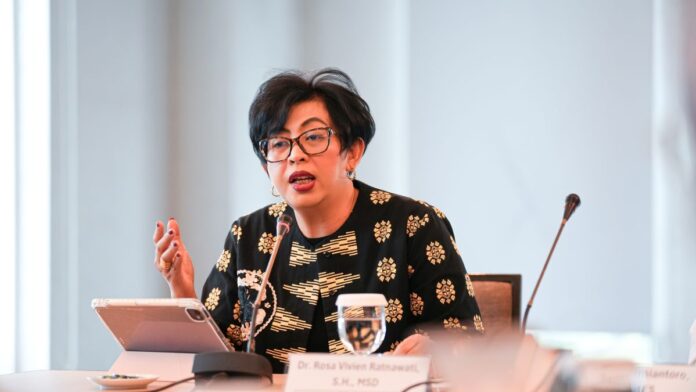
“Addressing super pollutants in Indonesia is important because these pollutants have a direct impact on public health, particularly over the past decade. Moreover, Indonesia has established an absolute emissions limit under its second Nationally Determined Contribution (NDC), requiring rapid and short-term mitigation,” Secretary of the Ministry of Environment and Secretary General of BPLH Rosa Vivien Ratnawati said.
The proposed unit will operate under KLH/BPLH, with its secretariat to be led by the World Resources Institute (WRI) Indonesia. It is expected to serve as a strategic data center for super pollutant management, integrate super pollutant mitigation into national climate targets and sectoral policies, and strengthen coordination among government agencies.
The unit will also provide priority support to local governments in implementing measures to reduce super pollutant emissions.
KLH/BPLH said the cross-sector initiative would focus on coordinating concrete measures to cut super pollutant emissions, while also supporting climate stability, public health and quality of life.
The establishment of the unit is part of the international Super Pollutant Country Action Accelerator, an initiative launched by the Climate and Clean Air Coalition (CCAC) at the COP30 climate conference in Belém, Brazil.
Indonesia was selected in the first group of participating countries alongside Brazil, Cambodia, Kazakhstan, Mexico, Nigeria and South Africa.
“Support for the super pollutant unit program in Indonesia, together with Cambodia, is expected to be a good starting point for both countries to take concrete action to reduce super pollutant emissions in Southeast Asia,” CCAC Secretariat Head at UNEP Martina Otto said virtually.
Indonesia’s efforts to tackle super pollutants have faced challenges, including fragmented cross-sector coordination, limited national funding and programs that have largely been implemented independently.
WRI Indonesia Managing Director Arief Wijaya said the planned unit could help strengthen Indonesia’s efforts to reduce emissions of key pollutants and accelerate climate mitigation.
“With the planned technical unit, hopefully Indonesia’s efforts to mitigate several critical pollutants will become more significant in slowing the pace of climate change and its impacts on communities,” Arief said. ***