

Ecobiz.asia — The COP30 climate summit opened Monday (Nov. 10, 2025) in Belém, Brazil, with calls for the summit to mark a turning point for concrete global climate action.
The two-week conference, running through Nov. 21, is expected to produce agreements that strengthen the implementation of global climate commitments.
COP30 President Andrea Corrêa do Lago said the conference must be remembered as the “COP of Truth”, one guided by science and integrity in every decision. He stressed the need for tangible progress on climate adaptation, the green economy, and sustainable job creation.
UNFCCC Executive Secretary Simon Stiell reminded delegates that promises made in Paris a decade ago would mean little without concrete steps to build climate resilience. He likened the Amazon River to a metaphor for the world’s interconnected ecosystems, emphasizing cross-sector and international collaboration.
In his opening address, Brazilian President Luiz Inácio Lula da Silva launched a Call for Action built on three pillars: strengthening national commitments through ambitious Nationally Determined Contributions (NDCs) backed by adequate means of implementation, creating a Climate Council under the UN General Assembly to elevate the political status of climate issues, and placing people at the center of the global climate agenda to ensure the green transition does not deepen poverty or hunger.
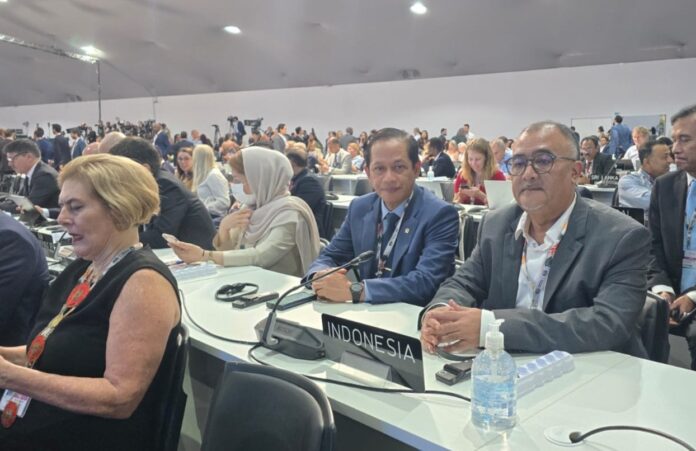
Indonesia attended the summit with a strong delegation led by Presidential Envoy for Climate and Energy Hashim S. Djojohadikusumo, accompanied by Minister of Environment and Head of the Environmental Protection Agency (BPLH) Hanif Faisol Nurofiq.
The delegation includes senior officials from multiple ministries, private sector leaders, academics, and youth representatives, reflecting Indonesia’s whole-of-nation approach to global climate diplomacy.
Through formal negotiations, Indonesia is active in seven key agenda items, including the Global Stocktake, National Adaptation Plans (NAPs), Just Transition, and the Global Goal on Adaptation (GGA). Meanwhile, the Indonesia Pavilion serves as a collaborative platform showcasing tangible mitigation and adaptation initiatives such as carbon trading, forest conservation, and bilateral climate partnerships.
“Indonesia comes not only with commitments, but with real actions,” Hashim said. “From tropical forest protection and clean energy transition to strengthening our carbon economy, we are contributing to a more resilient planet.”
Minister Hanif Faisol Nurofiq added that COP30 represents a crucial moment to demonstrate Indonesia’s climate leadership through implementation. “Green development is not just possible, it’s profitable. Indonesia leads by example, not by promises,” he said. ***