
Beyond the Haze: Why the Singapore-Indonesia Value Chain Demands Real Mutual Accountability

MORE ARTICLES

By: Riza Suarga (Chairman Indonesia Carbon Trade Association/IDCTA) 

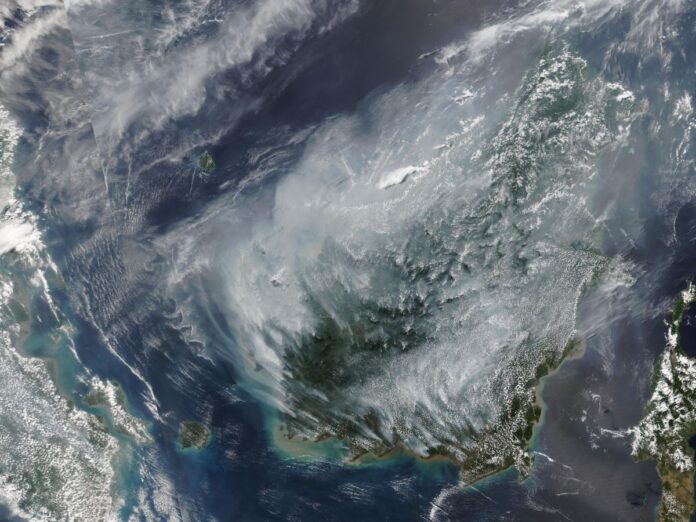
Ecobiz.asia – Singapore’s haze situation has recently been linked by Prime Minister Lawrence Wong to forest and peatland fires in Indonesia, with the possibility of legal action against companies found responsible. In a social media post on 15 October 2026, Wong said Singapore would investigate companies that may have contributed to the haze and, where warranted, take action under the country’s Transboundary Haze Pollution Act. While the move signals Singapore’s determination to address the haze, it also raises a broader question about accountability across the economic networks that benefit from land-based commodities.

Read also:  As Shipping Seeks Cleaner Fuels, Pupuk Indonesia Eyes $500 Million Ammonia Hub in Batam to Challenge Singapore

Lawrence Wong represents a new generation of Singaporean leadership, yet his approach suggests either a disconnect from—or an unwillingness to confront—the historical foundations of Singapore’s economic prominence.

​For decades, Singapore has operated as a key financial haven, benefiting from capital flows often tied to illicit activities, including tax evasion, transfer pricing, and money laundering. Simple economic facts highlight this contradiction: a nation with no natural reserves of rubber, palm oil, or coal has somehow earned a reputation as the world’s fifth-largest exporter of these commodities. Having accumulated wealth through decades of global capital inflow—much of it originating from Indonesia—the country now seeks to position itself as a pinnacle of global governance and regulatory purity.

Read also:  UNEP Praises Indonesia’s Large-Scale Jurisdictional REDD+ Programme as Model for Forest Countries

​While transboundary haze frequently dominates regional diplomacy, it is merely the visible symptom of a much deeper, interconnected problem. Tackling it requires honest self-reflection from Indonesia as well. We must acknowledge that much of the land clearing, forest burning, and encroachment on the ground is driven by local communities and domestic actors. Frequently, political leaders deny these realities to protect commercial interests or secure votes from the very constituencies driving the land clearing.

​However, the supply chain does not end at the forest edge. These cleared lands are converted into oil palm plantations, supplying fruits to processing mills owned by corporate entities publicly listed on the Singapore Exchange (SGX), alongside major Malaysian conglomerates. This value chain has operated for decades, legitimised and financed by one of the world’s premier global financial hubs.

Read also:  COP31: Barito Calls for Broader Dialogue to Unlock Geothermal Potential in Sumatran Protected Forests

​If domestic enforcement remains sluggish, those participating in this regional supply chain must recognize their role. Beyond diplomatic rhetoric, true accountability requires addressing both ends of the spectrum: local practices on the ground and the financial centers that legitimize and profit from the trade. ***
LATEST STORIES

MORE ARTICLES

ASEAN Carbon Market Alliance Sets Sights on Regional Integration and Global Standards

Ecobiz.asia – The ASEAN Common Carbon Framework (ACCF) is seeking a more formal role within ASEAN and closer alignment with global carbon market standards...

Indonesia Launches Three Blue Carbon Projects to Restore Coastal Ecosystems

Ecobiz.asia – Indonesia has launched three blue carbon projects focused on mangrove and seagrass restoration, as the government seeks to strengthen the role of...

Indonesia, Japan Develop Forestry Carbon Methodologies for High-Integrity JCM Projects

Ecobiz.asia – Indonesia and Japan are developing carbon accounting methodologies for forestry projects under their Joint Crediting Mechanism (JCM), focusing on forests, peatlands and...

Indonesia Backs Safe Harbour Mechanism to Boost Confidence in Global Carbon Markets

Ecobiz.asia – Indonesia has welcomed proposals for a safe harbour mechanism to provide legal certainty for companies purchasing and using carbon credits, as governments...

Indonesia Develops Roadmap to Cut Methane Emissions Across Key Sectors

Ecobiz.asia – Indonesia is preparing a coordinated roadmap to reduce methane emissions from major sources, including coal mining, oil and gas operations, agriculture and...

TOP STORIES

PGN Jaga Keandalan Pasokan Gas Bumi bagi 41.000 Pelanggan di Cirebon

Ecobiz.asia -- PT Perusahaan Gas Negara (Persero) Tbk (PGN) mengandalkan infrastruktur Offtake Station Sunyaragi untuk menjaga keandalan penyaluran gas bumi kepada lebih dari 41.000...

PLN Nusantara Renewables Perkuat Portofolio Energi Bersih lewat Empat Kesepakatan di COP31

Ecobiz.asia – PT PLN Nusantara Renewables (PLN NR) memperluas portofolio energi terbarukan melalui empat kesepakatan strategis yang ditandatangani sejumlah perusahaan patungan atau joint venture...

ASEAN Carbon Market Alliance Sets Sights on Regional Integration and Global Standards

Ecobiz.asia – The ASEAN Common Carbon Framework (ACCF) is seeking a more formal role within ASEAN and closer alignment with global carbon market standards...

Indonesia Launches Three Blue Carbon Projects to Restore Coastal Ecosystems

Ecobiz.asia – Indonesia has launched three blue carbon projects focused on mangrove and seagrass restoration, as the government seeks to strengthen the role of...

Emisi Fosil Terus Meningkat, CERAH Dorong Indonesia Dukung Target Elektrifikasi Global 35% pada 2035

Ecobiz.asia – Peningkatan emisi karbon dari penggunaan bahan bakar fosil memperkuat urgensi percepatan elektrifikasi di Indonesia. CERAH mendorong pemerintah mendukung target elektrifikasi global sebesar...