
By: Riza Suarga (Chairman Indonesia Carbon Trade Association/IDCTA)
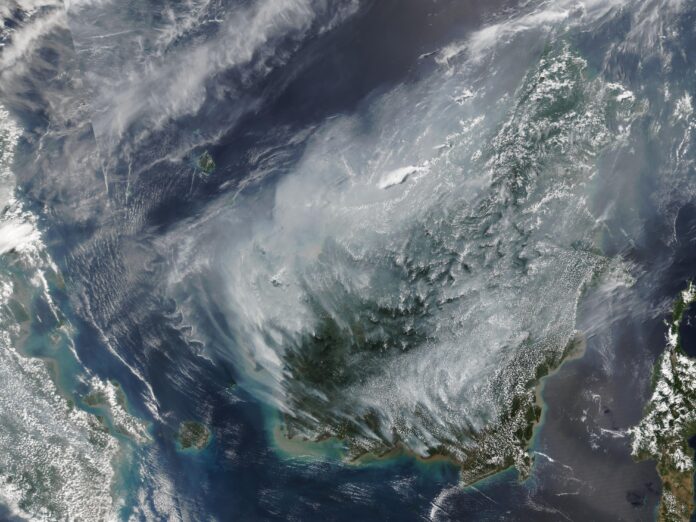
Ecobiz.asia – Singapore’s haze situation has recently been linked by Prime Minister Lawrence Wong to forest and peatland fires in Indonesia, with the possibility of legal action against companies found responsible. In a social media post on 15 October 2026, Wong said Singapore would investigate companies that may have contributed to the haze and, where warranted, take action under the country’s Transboundary Haze Pollution Act. While the move signals Singapore’s determination to address the haze, it also raises a broader question about accountability across the economic networks that benefit from land-based commodities.
Lawrence Wong represents a new generation of Singaporean leadership, yet his approach suggests either a disconnect from—or an unwillingness to confront—the historical foundations of Singapore’s economic prominence.
For decades, Singapore has operated as a key financial haven, benefiting from capital flows often tied to illicit activities, including tax evasion, transfer pricing, and money laundering. Simple economic facts highlight this contradiction: a nation with no natural reserves of rubber, palm oil, or coal has somehow earned a reputation as the world’s fifth-largest exporter of these commodities. Having accumulated wealth through decades of global capital inflow—much of it originating from Indonesia—the country now seeks to position itself as a pinnacle of global governance and regulatory purity.
While transboundary haze frequently dominates regional diplomacy, it is merely the visible symptom of a much deeper, interconnected problem. Tackling it requires honest self-reflection from Indonesia as well. We must acknowledge that much of the land clearing, forest burning, and encroachment on the ground is driven by local communities and domestic actors. Frequently, political leaders deny these realities to protect commercial interests or secure votes from the very constituencies driving the land clearing.
However, the supply chain does not end at the forest edge. These cleared lands are converted into oil palm plantations, supplying fruits to processing mills owned by corporate entities publicly listed on the Singapore Exchange (SGX), alongside major Malaysian conglomerates. This value chain has operated for decades, legitimised and financed by one of the world’s premier global financial hubs.
If domestic enforcement remains sluggish, those participating in this regional supply chain must recognize their role. Beyond diplomatic rhetoric, true accountability requires addressing both ends of the spectrum: local practices on the ground and the financial centers that legitimize and profit from the trade. ***