
Ecobiz.asia – Indonesia’s Ministry of Forestry launched The State of Indonesia’s Forests 2026 (SOIFO 2026) at the Food and Agriculture Organization of the United Nations (FAO) headquarters in Rome on Wednesday, highlighting the country’s 95.5 million hectares of forest cover as a strategic asset for food security, climate resilience and community livelihoods.
The forest cover accounted for 51.1% of Indonesia’s total land area in 2025, according to the publication.
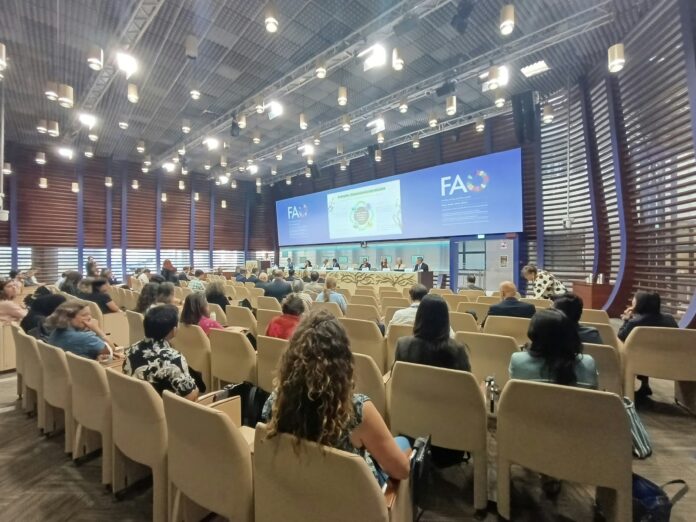
The launch was part of Forests for Resilience and Prosperity: Indonesia’s Journey and the Launch of the State of Indonesia’s Forests 2026, held during the 10th World Forest Week alongside the 28th session of the FAO Committee on Forestry (COFO28).
The event was organized by the Ministry of Forestry in cooperation with FAO and the Embassy of Indonesia in Rome.
With the theme “Supporting Food Security, Climate Resilience and Community Welfare,” SOIFO 2026 outlines the condition of Indonesia’s forests and the government’s approach to transforming the forestry sector by linking forest protection, sustainable utilization, ecosystem restoration and community participation.
The publication shows that more than half of Indonesia’s land area remains covered by forests. These forests play an important role in regulating water systems, supporting food security, storing and absorbing carbon, and protecting biodiversity.
The economic and social contribution of forests is also reflected in Indonesia’s social forestry program. As of June 2026, the program had provided communities with access to manage around 8.37 million hectares through 11,236 approvals, reaching approximately 1.43 million families.
The access provides a basis for communities to develop agroforestry, non-timber forest products and nature-based tourism according to local potential.
One example highlighted in SOIFO 2026 is Clungup Mangrove Conservation (CMC) Tiga Warna in Malang, East Java. The community-based conservation initiative generates around Rp3.2 billion ($190,000) in annual revenue, supported by 60 trained guides, 11 divers and four certified rescue personnel.
The restored area is also home to at least 45 mangrove species and 55 bird species.
Beyond nature-based tourism, SOIFO 2026 identifies economic opportunities linked to forests through non-timber forest products, ecosystem services, carbon and science-based utilization of biological resources.
The publication emphasizes that developing these forest-based economic opportunities will require stronger governance, product traceability, innovation and partnerships while maintaining forest sustainability and ensuring benefits for local communities. ***