

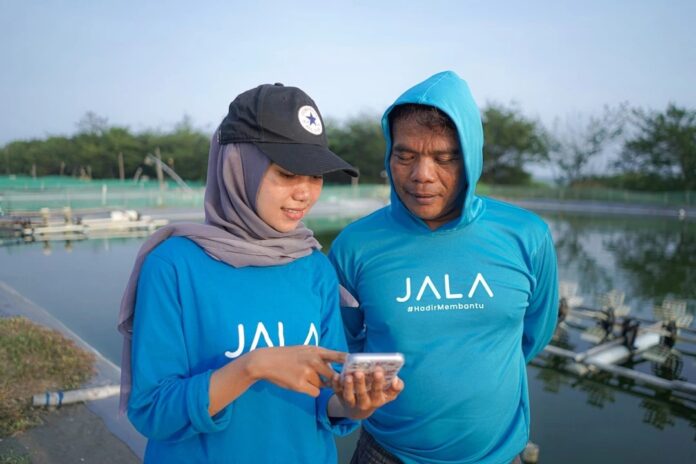
Ecobiz.asia — The Dutch Fund for Climate and Development (DFCD) plans to provide €340,000 in grant funding to Indonesian aquaculture firm PT Jala Akuakultur Lestari Alamku (JALA) to strengthen climate resilience, traceability, and environmental safeguards across the country’s shrimp value chain.
The support will be channeled through DFCD’s Origination Facility, managed by the World Wide Fund for Nature Netherlands (WWF-NL) in partnership with development organization SNV, with implementation support from WWF Indonesia.
The grant agreement is expected to be signed soon after DFCD selected JALA as a project partner to pilot climate-adaptive aquaculture practices, the fund said in a statement as quoted on Thursday (March 26, 2026).
Stuart Beavis, DFCD Regional Lead for Asia, said the partnership aims to address mounting climate-related challenges in Indonesia’s shrimp sector, including water quality fluctuations, temperature stress, salinity shocks, and rising disease risks, which disproportionately affect small and medium-scale farmers.
“With JALA, we will work on improving supply chain traceability and developing pathways to increase farmer income. Leveraging JALA’s large shrimp database, we aim to optimize feeding, aeration, and water exchange. The project will also help reduce nutrient loading, water stress, and pollution in ponds,” Beavis said.
JALA, a fast-growing aquaculture technology company, currently works with more than 10,000 registered shrimp farms and operates one of Indonesia’s largest aquaculture data platforms, providing farmers with real-time insights, input supply, and market access.
At the same time, the sector faces increasing scrutiny over environmental impacts, particularly mangrove degradation linked to poorly managed pond expansion, as well as growing demand from global buyers for traceable and responsibly sourced products.
Under the program, DFCD funding will support baseline environmental and social assessments, the development of a climate-adaptive shrimp farming model, and the strengthening of JALA’s traceability systems.
The project will also include independent verification of land-use history to address deforestation risks, as well as market analysis to support the development of certified shrimp products aligned with international standards.
JALA CEO Liris Manduningtyas said the partnership would help strengthen supply chain integrity while promoting sustainable production practices.
“Together with WWF and DFCD, we are implementing climate-adaptive shrimp farming to build a deforestation-free, traceable, and climate-resilient supply chain,” she said.
JALA’s integrated business model combines digital farm management, water-quality monitoring through IoT sensors, input supply, and downstream trading and processing, positioning the company to scale climate-adaptive aquaculture practices.
The company has recorded more than 18,000 application users and built a large dataset from over 27,000 shrimp farming cycles, which is expected to support productivity improvements and risk management.
The program is also expected to strengthen JALA’s investment readiness as the company prepares for future funding rounds, including debt and equity financing. ***