

Ecobiz.asia – The Indonesian government is targeting the national carbon market to be fully operational by the end of June 2026, with large scale carbon trading expected to begin in July the same year.
Presidential Special Envoy for Climate and Energy Hashim Djojohadikusumo said the target is supported by the issuance of Presidential Regulation No. 110 of 2025 on the Implementation of Carbon Economic Value Instruments and National Greenhouse Gas Emission Control.
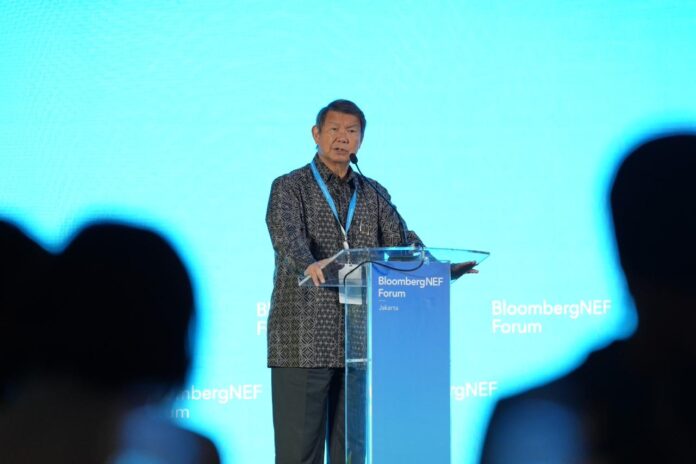
“The presidential regulation that governs and establishes the carbon market is a game changer,” Hashim said during the ESG Sustainability Forum 2026 in Jakarta on Tuesday.
The regulation sets out the framework for carbon economic value implementation, including emissions trading and carbon credit mechanisms, the recording of carbon units in the Carbon Unit Registration System, the prevention of double counting, and the linkage between domestic and international carbon markets.
Hashim said the government is currently finalizing the integration of several carbon registry systems so that all transactions can be recorded in an integrated and accountable manner under a single national system.
He said the integration is a key prerequisite for Indonesia’s carbon market to operate in line with international standards and gain the confidence of global market participants.
“I can report today that by the end of June all elements of the carbon market will be operational, and by July we expect trading to begin,” Hashim said.
He added that Indonesia’s carbon market holds significant economic value potential amid rising international interest in carbon credits, particularly those derived from natural resources.
According to Hashim, Indonesia has a comparative advantage through its nature based solutions, including forests, mangroves, seagrass meadows, and marine ecosystems, which are a major attraction for global carbon investors.
He said various international meetings have shown a positive response to Indonesia’s carbon policy following the clarification of its regulatory framework.
“They are all enthusiastic because of the presidential regulation that formally establishes the carbon market,” he said.
Beyond nature based carbon trading, the government is also opening opportunities for the development of carbon capture and storage technologies by leveraging Indonesia’s geological potential.
The government expects the operation of the carbon market to support environmental conservation financing, forest protection, and the national energy transition, while also creating a new source of economic growth.
The policy aligns with Indonesia’s commitments on climate change mitigation and the achievement of sustainable development goals. ***