
Ecobiz.asia — Indonesia is stepping up efforts to build a high-integrity jurisdictional REDD+ carbon market, positioning forest carbon trading as a key financing instrument to support massive forest restoration, conservation, and climate targets under its COP30 commitments.
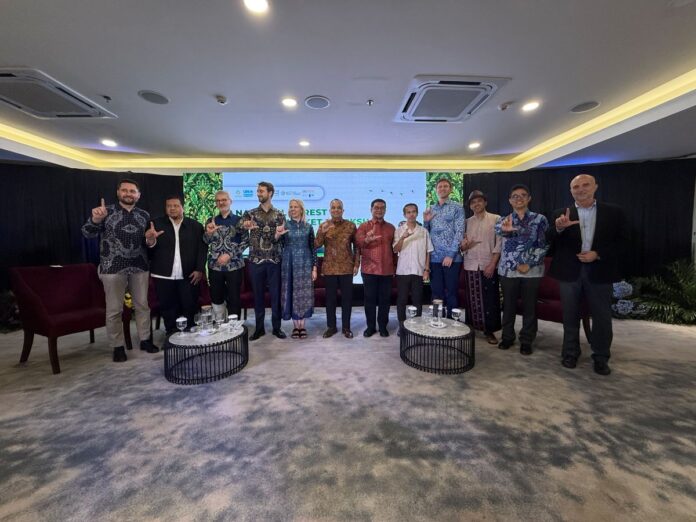
The initiative was highlighted during the National Forest Carbon Market Workshop: Enabling JREDD+ Transactions through Legal and Policy Framework held in Jakarta on Tuesday (May 26, 2026), which brought together government officials, provincial administrations, private sector representatives, civil society organizations, and international partners.
Director General of Sustainable Forest Management at Indonesia’s Ministry of Forestry, Laksmi Wijayanti, said the government views carbon markets as a strategic financing mechanism to help achieve Indonesia’s ambitious forestry and climate targets, including the restoration and rehabilitation of at least 12 million hectares of degraded land, the protection of around 50 million hectares of natural forests, expansion of social forestry across 8.3 million hectares, and formal recognition of 1.4 million hectares of customary forests.
“These goals require enormous resources that cannot rely solely on government financing. Carbon markets provide an alternative financing instrument to support collaborative action involving all stakeholders,” Laksmi said.
She emphasized that Indonesia’s carbon market development must be grounded in high environmental integrity, transparency, and fair benefit-sharing mechanisms to ensure local communities and forest stakeholders receive meaningful incentives.
According to Laksmi, Ministerial Regulation No. 6 of 2026 was introduced to provide a legal foundation for forest carbon trading as part of Indonesia’s broader emissions reduction strategy.
However, she acknowledged that implementing jurisdictional REDD+ mechanisms would require stronger governance systems, transparent monitoring frameworks, and broad stakeholder participation.
“We believe jurisdictional REDD+ can bridge voluntary and compliance carbon markets while ensuring mitigation efforts at both project and landscape scales are properly integrated and benefits are distributed fairly,” she said.
International partners also highlighted the importance of strengthening trust, safeguards, and market integrity as Indonesia moves toward operationalizing jurisdictional REDD+ transactions.
UK Embassy Minister Counsellor (Development) Peter Rajadiston said predictable and transparent regulations would be critical to making Indonesia’s forest carbon market investable.
“We strongly recommend efforts to operationalize nesting through clear and practical ministerial guidance, ensuring that the system is predictable, transparent, and investable,” Peter said.
“But success will not be defined by technical systems alone. It will be by building trust — trust that benefits are shared fairly, trust that rules are clear and consistently applied, and trust that all stakeholders have a meaningful stake,” he added.
The UK government currently supports several forest and carbon market initiatives in Indonesia, including the GREEN for Riau program under the UN-REDD Programme, carbon pricing support through the UK PACT initiative, and forest monitoring system development under the AIM for Forest program.
Peter said the shared objective is to develop a carbon market with integrity, real emissions reductions, protected forests and peatlands, and tangible benefits for local communities.
Meanwhile, Head of the UN Resident Coordinator’s Office in Indonesia, Matthew David Johnson-Idan, described Indonesia’s forests as both a national asset and a global public good due to their role in carbon storage, biodiversity protection, water regulation, and community livelihoods.
He noted that around 60% of Indonesia’s emissions reduction target under its Enhanced Nationally Determined Contribution (NDC) is expected to come from the forestry and land-use sector.
Johnson-Idan said the issuance of Ministerial Regulation No. 6 of 2026 marked an important milestone in strengthening Indonesia’s national carbon market framework.
“This provides a critical foundation for carbon trading in the forestry sector, covering governance, project implementation, monitoring, verification, and stakeholder participation,” he said.
According to him, the next challenge is translating the regulatory framework into credible transactions supported by strong monitoring, reporting, and verification (MRV) systems, transparent registries, safeguards, and mechanisms to prevent double counting.
“Carbon markets must deliver for people as well as for the climate,” he said. “The real test is whether results are delivered — reducing emissions, protecting ecosystems, and ensuring benefits are shared in an inclusive way.”
The United Nations, through agencies including UNEP, FAO, and the UN-REDD Programme, pledged continued support for Indonesia in strengthening readiness for a high-integrity forest carbon market.
The workshop is expected to contribute to the development of more operational and technical rules for jurisdictional REDD+ implementation in Indonesia, while strengthening the country’s position as a potential global leader in high-integrity forest carbon markets. ***