
Ecobiz.asia — Indonesia is opening opportunities for methane reduction projects at landfill sites as part of efforts to strengthen the country’s carbon economy and accelerate greenhouse gas emission cuts.
Environment Minister and Head of the Environmental Control Agency (BPLH), Moh Jumhur Hidayat, said methane emissions from landfills offer significant potential for both emission reductions and carbon-based economic value.
“This is about carbon. Not only activities that produce oxygen can generate carbon economic value, but eliminating emissions can also create financial benefits,” Jumhur said during the reopening ceremony of the Climate and Carbon Collaboration and Consultation House (RKKIK) in Jakarta on Thursday (June 4, 2026).
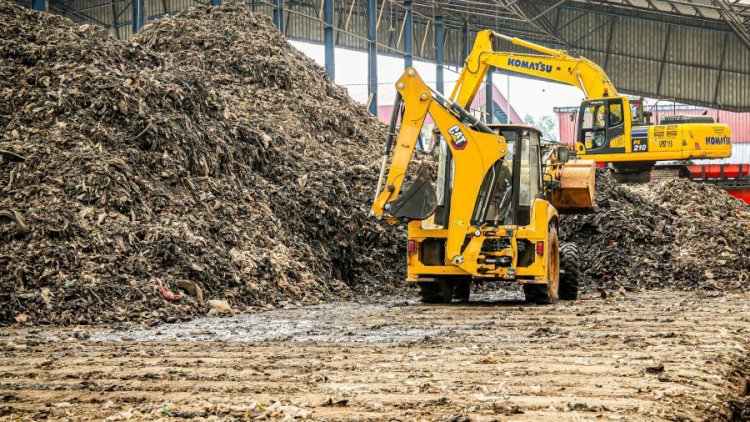
Jumhur revealed that a South Korean company had previously expressed interest in developing a methane management project at the Bantargebang Integrated Waste Processing Site in Bekasi, one of the largest landfill sites in Southeast Asia.
“Four or five years ago, there was a Korean company ready to improve Bantargebang, including closing open dumping areas and capturing methane gas. The projected carbon revenue was around US$20 million,” he said.
According to Jumhur, such projects would still provide major benefits for Indonesia by accelerating national greenhouse gas emission reductions.
“In fact, we are the ones who benefit as well, because the methane is eliminated and our emission reduction targets can be achieved faster,” he added.
He said similar opportunities exist not only in Bantargebang but also across many open-dumping landfill sites throughout Indonesia.
Jumhur instructed officials within the Ministry of Environment and BPLH to calculate methane production from landfills nationwide to assess the broader potential for emission-reduction carbon projects.
“Methane has more than 30 times the impact of CO2. If this issue is addressed properly, many parties may compete to help solve Indonesia’s open dumping problem,” he said.
The ministry is also preparing a methane emission reduction roadmap for Jakarta in collaboration with the Jakarta provincial government. The model is expected to be replicated in other regions across the country.
“The technology is relatively similar and can be offset at a certain price, allowing the benefits to return to the public,” Jumhur said.
According to a recent report by the Emmett Institute, a center for environmental law and climate policy at the University of California Law School, the Bantargebang landfill is the world’s second-largest methane emitter after the Campo de Mayo landfill in Buenos Aires, Argentina.
Both landfill sites were identified by Carbon Mapper satellite monitoring as among the world’s largest methane emitters, releasing more than six tons of methane per hour. ***