
Ecobiz.asia — Indonesia’s Ministry of Energy and Mineral Resources is preparing to accelerate the country’s carbon market development after identifying around 120 energy-sector carbon projects in the national trading pipeline with a potential value of Rp1.7 trillion (around US$104 million).
Speaking at the Ministerial Dialogue on Climate Change during INVIROTECH 2026 in Jakarta on Thursday (June 11, 2026) Director General of New and Renewable Energy and Energy Conservation (EBTKE) at the Ministry of Energy and Mineral Resources, Eniya Listiani Dewi said the government is moving quickly to strengthen a high-integrity carbon market framework following the issuance of Presidential Regulation No. 110/2025 on Carbon Pricing
“For the energy transition sector, we want to accelerate projects, and currently there are around 120 projects already in the pipeline. The potential value is around Rp1.7 trillion,” Eniya said.
She did not disclose the locations or specific types of the projects currently under development.
Eniya added that the ministry has also finalized a draft ministerial regulation on carbon trading in the energy sector, which will serve as a derivative regulation of the new presidential decree.
“The draft ministerial regulation has been completed. We are now finalizing it before submitting it for harmonization,” she said.
The regulation is intended to provide legal certainty for greenhouse gas emission offset mechanisms in the energy sector while ensuring that carbon units generated under the scheme maintain high environmental integrity.
The government also expects the new framework to strengthen investor confidence and accelerate the development of green projects and low-carbon technologies in Indonesia.
According to Eniya, the energy sector plays a strategic role in supporting Indonesia’s target to achieve net-zero emissions by 2060 or earlier.
She described carbon pricing mechanisms as a strategic instrument to create financial incentives for emissions reductions, improve the commercial viability of low-carbon projects, and unlock new sources of climate financing for the energy sector.
Indonesia estimates that carbon trading mechanisms could potentially mobilize up to US$7.7 billion annually in green investment.
Eniya said renewable energy projects are increasingly expected to participate in the carbon market, including waste-to-energy power projects.
The government is also preparing revisions to regulations on renewable energy development to facilitate hybrid renewable energy projects.
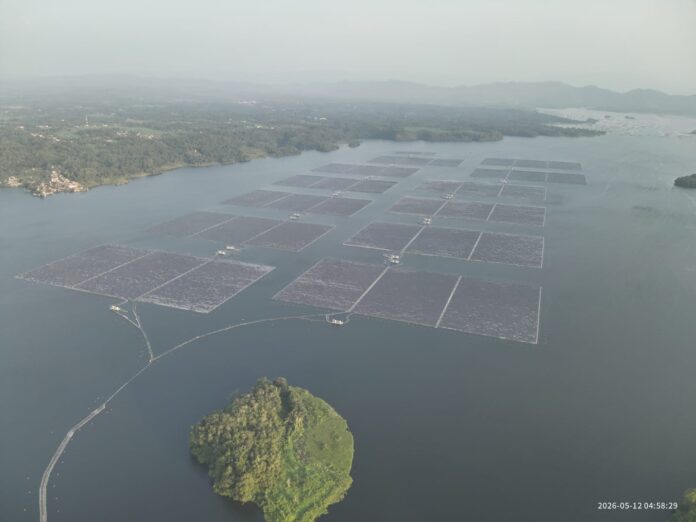
“For example, hydropower investments that are integrated with dam development could also be combined with floating solar power projects. Hybrid models can now be developed,” she said.
She added that regulatory simplification and integrated one-stop investment services would be key to accelerating the development of Indonesia’s carbon market and clean energy investment ecosystem. ***