
Ecobiz.asia – Around 2.6 gigawatts (GW) of Sumatra’s estimated 5.7 GW geothermal potential lies within the Tropical Rainforest Heritage of Sumatra, raising questions over how to develop the resource while protecting biodiversity and sensitive forest ecosystems, Barito Renewables said.
Dian A. Purbasari, Barito Renewables’ Special Envoy for Climate Change and Sustainability, called for an evidence-based approach and broader stakeholder dialogue to assess geothermal development in protected areas.
Speaking at the Indonesia Pavilion during COP31 in Türkiye on Wednesday (Nov. 11, 2026), Dian said geothermal projects should be assessed differently from conventional mining operations because of their distinct land-use requirements and environmental footprints.
The Tropical Rainforest Heritage of Sumatra encompasses Gunung Leuser, Kerinci Seblat and Bukit Barisan Selatan national parks. Sumatra’s renewable energy development plan targets 9.5 GW of capacity by 2034, making the development of its geothermal resources an important consideration.
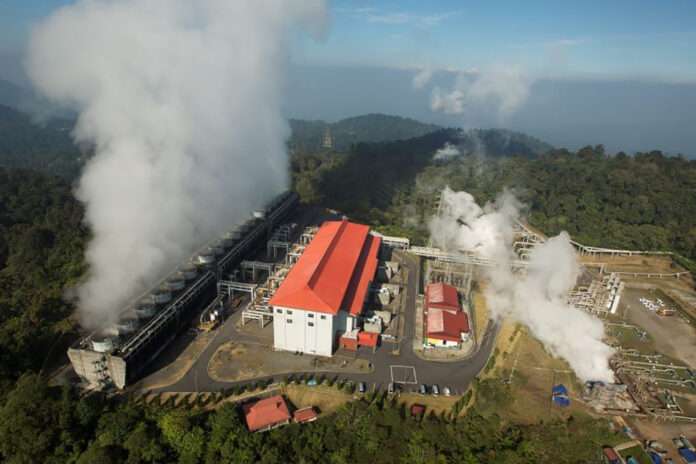
Dian cited Star Energy Geothermal’s operations at the Salak field in West Java as an example of geothermal production alongside forest conservation. Operating within Gunung Halimun Salak National Park since 1994, the facility has installed capacity of more than 400 megawatts (MW).
According to data presented by Dian, the Salak operation occupies around 300 hectares, or 3% of its 10,000-hectare working area. The presentation also compared its land use and electricity output per hectare with a coal mining operation, which occupies 32,279 hectares of an 84,938-hectare concession.
Satellite imagery from 2014 and 2021 showed no new forest clearing around the Salak operation, while camera-trap monitoring recorded increases in sightings of several endangered species between 2008 and 2023. Javan leopard sightings, for example, rose from six to 51.
Barito also plans to restore 325 hectares of degraded forest around the Salak geothermal area in 2026–2027, involving approximately 120,000 trees. The programme is being carried out with the Gunung Halimun Salak National Park authority and three local forest farmer groups.
Dian said the Salak experience showed that geothermal development and forest conservation could be pursued together, but stressed that each location required careful assessment.
She called for dialogue involving independent experts, local communities and other stakeholders to establish appropriate safeguards, particularly for geothermal prospects in areas with significant biodiversity value. ***