
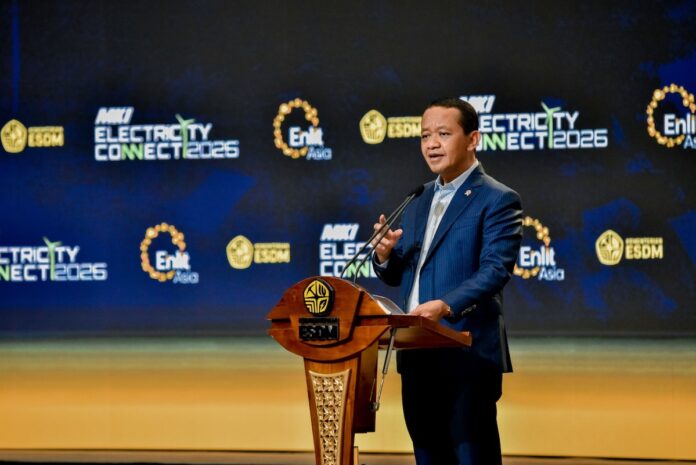
Ecobiz.asia – Energy and Mineral Resources Minister Bahlil Lahadalia has assured that subsidized fuel prices will not increase through the end of 2026, in line with President Prabowo Subianto’s directive. Bahlil made the statement on the sidelines of the MKI Electricity Connect 2026 event in Jakarta on Tuesday (Sept. 22, 2026).
“Subsidized fuel prices will not increase through the end of the year. That is President Prabowo’s directive,” Bahlil said.
Meanwhile, Bahlil explained that non-subsidized fuel prices would follow global oil market developments, as reflected in the Indonesian Crude Price (ICP). He said non-subsidized fuel prices could increase if ICP rises and would be adjusted downward if ICP declines.
“Non-subsidized fuel prices will follow market prices. If global market prices, or ICP, rise, they will automatically increase. But if ICP falls, there will also be a downward adjustment,” he said.
Bahlil also said the government was ensuring that national fuel reserves remained at the minimum standard of 18–21 days.
“The most important thing now is for the government to ensure that our fuel reserves meet the minimum standard of 18 to 21 days,” he said. In the same occasion, Bahlil renewed his appeal to middle- and upper-income Indonesians not to use subsidized fuel.
He said the use of subsidized fuel by economically capable consumers could reduce the allocation available to people who are entitled to receive the subsidy.
“I appeal to my fellow citizens who can afford it, those with good incomes, middle- to upper-income groups, and those with expensive cars, not to use subsidized fuel,” he said.
Bahlil cited a recent police finding in Makassar involving a Mitsubishi Pajero that was reportedly filled with as much as 700 liters of subsidized fuel.
“In Makassar, the police found a Pajero whose tank was filled with up to 700 liters. We should use our common sense,” he said. He said the use of subsidized fuel by economically capable vehicle owners, particularly when the fuel is subsequently resold, could lead to a shift in the distribution of subsidy benefits.
“How could there not be a shift? If an expensive car is filled with subsidized fuel and the fuel is then resold,” Bahlil said. According to him, such practices harm people who are entitled to subsidized fuel because the available subsidy allocation is also consumed by those who can afford to pay market prices.
“Those who are entitled to receive it are losing out. Shouldn’t we feel ashamed that the allocation meant for people who need subsidized fuel is being taken by those who can afford it?” he said. ***