

Ecobiz.asia — Indonesia’s Just Energy Transition Partnership (JETP) Secretariat has launched the Just Transition Thematic Report, a technical document prepared as part of the update to the Indonesia’s Comprehensive Investment and Policy Plan (CIPP) 2023.
Released on December 18, the report provides guidance for Indonesia’s shift toward cleaner power while ensuring fairness and inclusion for communities affected by structural changes in the energy sector.
The event opened with welcoming remarks from Tubagus Nugraha, Executive Director for Priority Economic Policy Synchronisation at the National Economic Council of Indonesia, who underscored the importance of collaboration between institutions and aligning energy transition policies with Indonesia’s broader economic strategies.
Peter Rajadiston, UK Minister Counsellor for Development in Indonesia, welcomed the report as an important step toward more transparent, evidence-based planning. He reaffirmed the United Kingdom’s strong support for Indonesia’s energy transition and emphasised that clean energy will be central to the UK-Indonesia Strategic Partnership, which is due to be launched in January.
“The UK has been a long-standing partner in Indonesia’s energy transition, supporting policy development, capacity building, and technical cooperation. As we prepare to launch the UK-Indonesia Strategic Partnership, clean energy and economic growth will be at its heart. Clean energy will create jobs, sustain economic progress, and strengthen Indonesia’s international competitiveness,” he said.
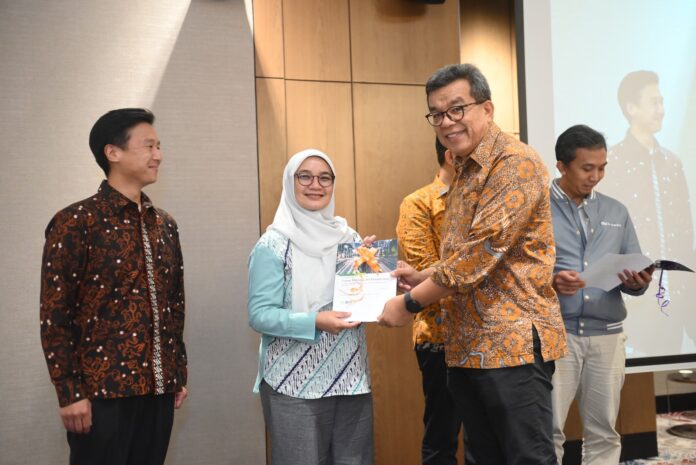
Paul Butarbutar, Head of the Indonesia JETP Secretariat, highlighted the report’s role in strengthening the implementation of the Just Transition Framework as part of the CIPP update. The formal launch included the handover of the Just Transition Thematic Report from the JETP Secretariat to the National Economic Council, the Coordinating Ministry for Economic Affairs, the Ministry of Energy and Mineral Resources, and the UK Embassy.
The Jakarta event brought together central and regional government agencies, state-owned enterprises, civil society groups, and development institutions. Discussions centred on strengthening the understanding of Indonesia’s Just Transition Framework, especially Standard 9, which covers economic diversification and transformation in areas undergoing energy transition.
A separate presentation highlighted how the Just Transition Framework is being tested at project level, drawing on assessments in the Dieng geothermal region and Jeneponto’s wind-power areas. The findings pointed to opportunities, such as potential growth in local services and agricultural value chains, and challenges, including employment impacts. It is noted that these early insights reinforce the need for continuous consultation and realistic planning in transition-affected regions.
A panel discussion brought together Dr Dina Nurul Fitria from the National Energy Council, Sahat Simangunsong, representative from the Geothermal directorate, the Ministry of Energy and Mineral Resources, and Dr. Hendra Iswahyudi, Acting Director of Renewable Energy at the same ministry.
The panellists underscored that Indonesia’s energy transition should be framed as a just and integrated development process that balances energy security with decarbonisation objectives. They highlighted the importance of embedding just transition principles within the national energy policy framework, including provisions on social equity, workforce skills development, and mitigation of transition risks such as stranded assets.
Drawing on lessons learnt from geothermal, wind, and decentralised renewable energy projects, the conversation focused on integrating renewable energy development with local economic conditions, boosting community involvement, and utilising local resources to improve productivity, resilience, and long-term regional development outcomes.
Closing the event, Dr. Farah Heliantina, Assistant Deputy for Energy Transition Acceleration at the Coordinating Ministry for Economic Affairs, represented by the ministry’s Senior Policy Analyst, Dwi Septi Cahyawati, reaffirmed the government’s commitment to ensuring the energy transition delivers inclusive and equitable outcomes.
“A just transition must ensure that communities are not left behind as the energy system evolves. Economic diversification and transformation offer an opportunity for all regions to progress together and share in the benefits of Indonesia’s energy future,” she said. ***