
Ecobiz.asia – Indonesia could generate up to 3.9 gigawatts (GW) of electricity from palm oil waste, according to the National Research and Innovation Agency (BRIN), which is exploring technologies to convert the waste into biogas while reducing methane emissions.
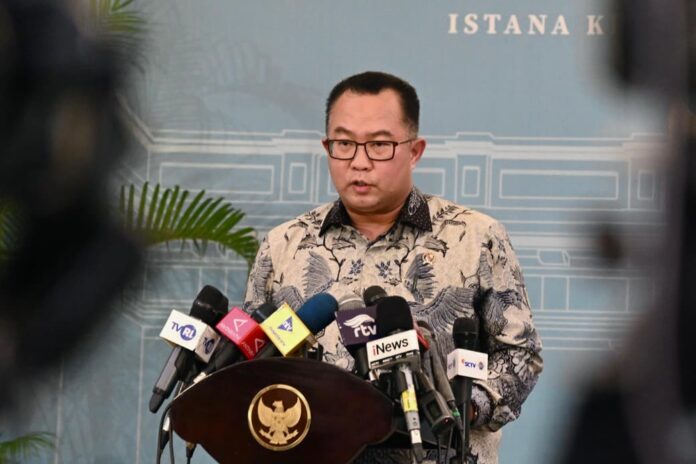
BRIN Head Arif Satria said the agency had briefed President Prabowo Subianto on the potential during a meeting at the State Palace on Tuesday (Oct. 27, 2026), as part of efforts to strengthen research and innovation in strategic sectors.
Indonesia produces around 328.43 million tonnes of fresh fruit bunches (FFB) annually, generating an estimated 229.9 million cubic meters of palm oil mill effluent (POME), Arif said. POME, together with empty fruit bunches, could provide feedstock for electricity generation with a combined potential capacity of around 3.9 GW.
“POME can be a source of methane, which contributes to the greenhouse effect. By turning it into biogas, we can address the environmental problem while developing an alternative energy source,” Arif said.
BRIN is also exploring ways to convert biogas into a form that can be stored and distributed in gas cylinders, potentially allowing the fuel to be used beyond areas near palm oil processing facilities.
One technology presented to the president was Metal-Organic Framework (MOF), a porous material that can store gases at relatively high densities. BRIN is examining its potential role in developing more practical biogas storage and distribution systems.
Arif said the initiative could also help reduce Indonesia’s dependence on imported liquefied petroleum gas (LPG), which he estimated costs the country around Rp97 trillion annually.
“If biogas can be converted into gas that can be stored in cylinders, I believe it could become one of the solutions for Indonesia’s future energy needs,” he said.
The proposal would require further technological development to establish commercially viable systems for biogas production, storage and distribution. Its potential depends on the ability to process palm oil waste efficiently and deliver the resulting fuel to end users.
Turning POME into biogas could also help capture methane that would otherwise contribute to greenhouse gas emissions, linking waste management with Indonesia’s efforts to expand alternative energy sources. ***