
Indonesia Opens Community Participation in Forestry Carbon Trading Under New Regulation

MORE ARTICLES

Ecobiz.asia — Indonesia’s Ministry of Forestry has expanded opportunities for public participation in forestry carbon trading following the issuance of Ministerial Regulation (Permenhut) No. 6/2026.

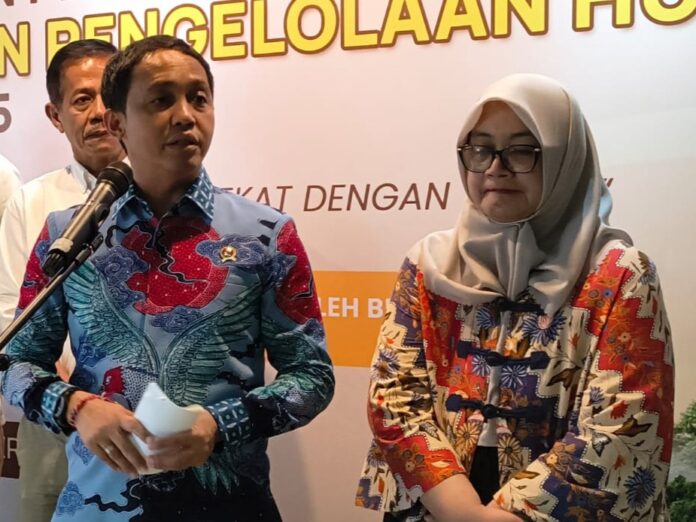
Forestry Minister Raja Juli Antoni said the regulation not only strengthens carbon market governance but also ensures broader community involvement in the green economy.

“This regulation expands participation in carbon trading. It is not limited to corporations, but also includes social forestry groups, indigenous communities, private forest owners, and environmental service providers,” he said on Wednesday (April 15, 2026).

The regulation, which governs procedures for carbon trading through greenhouse gas (GHG) emission offset schemes in the forestry sector, is seen as a key step in advancing Indonesia’s green economy.

Read also:  Indonesia Targets 2027 Grid Code Revision to Support Renewables, Battery Storage

“The issuance of this regulation is a concrete step to strengthen governance in forestry carbon trading, making it more credible, transparent, and inclusive. We want to ensure that carbon economic benefits not only contribute to national climate targets but also deliver tangible impacts for communities and forest sustainability,” he added.

Permenhut No. 6/2026 is a follow-up to Presidential Regulation No. 110/2025 on carbon economic value and emissions control, signed by President Prabowo Subianto. The policy aims to reinforce the implementation of carbon pricing instruments while supporting Indonesia’s emission reduction targets.

Read also:  ASEAN Urged to Align Carbon Pricing Systems as Indonesia Pushes Regional Cooperation

The regulation introduces key reforms, including a clearer roadmap covering emission reduction targets, project areas, and implementation strategies aligned with national climate commitments.

From a regulatory standpoint, it provides greater legal certainty for market participants. All carbon units must undergo standardized validation and verification by independent bodies and be recorded in the national registry system to prevent double counting.

The government has also streamlined business processes, with document submission, assessment, and certification conducted electronically within defined service timelines to improve efficiency and transparency.

Read also:  Indonesia Plans Special Unit to Tackle Methane, Black Carbon Emissions by 2027

International carbon trading is also regulated, requiring government approval to ensure alignment with Indonesia’s emission reduction targets.

Project developers are required to comply with environmental and social safeguards, including community engagement, protection of indigenous rights, and biodiversity conservation.

The ministry noted that conservation areas also hold significant potential for carbon trading through afforestation, reforestation, and revegetation (ARR) activities across approximately 1.27 million hectares of deforested and degraded land, with carbon sequestration potential estimated at 4.5–50 tons of CO2 equivalent per hectare per year. ***
LATEST STORIES

MORE ARTICLES

Breakthrough Energy, Temasek Extend Southeast Asia Climate Tech Program Through 2030

Ecobiz.asia – Breakthrough Energy, Temasek and Enterprise Singapore have extended their climate technology innovation program in Southeast Asia for another three years, committing to...

Indonesia Sees 3.9-GW Power Potential From Palm Oil Waste

Ecobiz.asia – Indonesia could generate up to 3.9 gigawatts (GW) of electricity from palm oil waste, according to the National Research and Innovation Agency...

AIIB, KfW Coordinate $850 Million in Climate Resilience Financing for Indonesia

Ecobiz.asia – The Asian Infrastructure Investment Bank (AIIB) and Germany’s KfW Development Bank are coordinating up to US$850 million in financing to support Indonesia’s...

Riau Seeks Faster ART-TREES Registration as International Carbon Buyers Await

Ecobiz.asia – Indonesia’s Riau provincial government is urging the central government to accelerate registration of its GREEN for Riau forest carbon program under the...

Beyond the Haze: Why the Singapore-Indonesia Value Chain Demands Real Mutual Accountability

By: Riza Suarga (Chairman Indonesia Carbon Trade Association/IDCTA)  Ecobiz.asia - Singapore’s haze situation has recently been linked by Prime Minister Lawrence Wong to forest and...

TOP STORIES

RSPO Bantah Perkebunan Sawit Jadi Pemicu Utama Karhutla, Sebut Ada Dugaan Sabotase

Ecobiz.asia – Roundtable on Sustainable Palm Oil (RSPO) membantah perkebunan kelapa sawit menjadi pemicu utama kebakaran hutan dan lahan (karhutla) di Indonesia. Organisasi sertifikasi...

Delegasi RI Imbangi Jejak Karbon Perjalanan Menuju COP31 Turkiye Lewat Aksi Tanam Mangrove

Ecobiz.asia – Kementerian Lingkungan Hidup (KLH/BPLH) mengajak delegasi Indonesia yang akan menghadiri Konferensi Iklim PBB atau COP31 di Antalya, Turki, untuk menghitung dan mengimbangi...

Tugas BPGMN Disorot, Pemulihan Gambut Disertai Evaluasi Izin dan Penegakan Hukum

Ecobiz.asia – Pembentukan Badan Pengelola Gambut dan Mangrove Nasional (BPGMN) perlu diikuti penyelesaian konflik lahan, evaluasi perizinan, dan penegakan hukum untuk mengatasi penyebab kebakaran...

Kesalehan Ekologis: Dari Tobat Menuju Aksi Nyata

Oleh: Saiful Latief, M.Si (Pranata Humas Ahli Muda, Direktorat Inventarisasi GRK dan MPV, Deputi Bidang Pengendalian Perubahan Iklim dan TKNEK, Kementerian Lingkungan Hidup/BPLH) Ecobiz.asia -...

Potensi Biomassa Indonesia Capai 83,4 Juta Ton, PLN EPI Perluas Bisnis Bioenergi

Ecobiz.asia – PT PLN Energi Primer Indonesia (PLN EPI) memetakan potensi biomassa nasional mencapai 83,4 juta ton per tahun. Perusahaan kini memperkuat rantai pasok...