

Ecobiz.asia — The Indonesian government plans to begin a pilot phase of the Carbon Unit Registry System (SRUK) by the end of March 2026, marking a key milestone toward the full operation of the national carbon trading system scheduled to start in early July 2026.
The SRUK pilot is being developed by the Ministry of Environment in coordination with the Financial Services Authority (OJK) and the Executive Team of the Steering Committee for Carbon Economic Value (Komrah), with support from the Climate Data Steering Committee.
The system is designed to serve as the backbone for transparency, accountability, and traceability in Indonesia’s carbon trading ecosystem.
The accelerated rollout of SRUK aligns with the government’s plan to operationalise the national carbon market following the enactment of Presidential Regulation No. 110/2025 on the Implementation of Carbon Economic Value Instruments and National Greenhouse Gas Emissions Control.
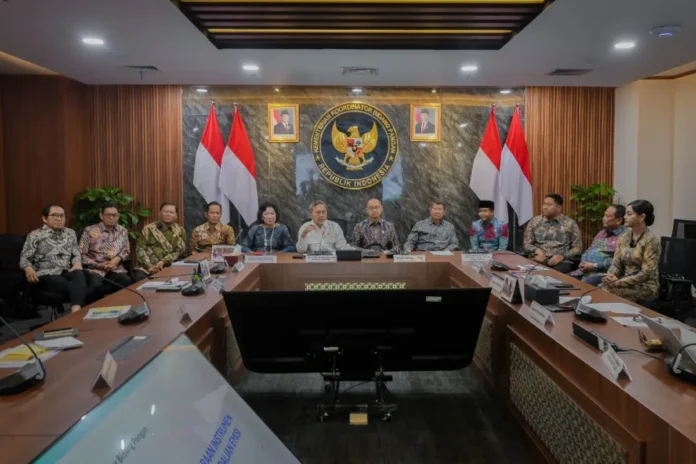
The agenda was discussed during a limited coordination meeting (Rakortas) of the Carbon Economic Value Steering Committee, chaired by Zulkifli Hasan in his capacity as head of Komrah.
“Presidential Regulation 110/2025 mandates a decentralised governance framework while ensuring integrity, transparency, and legal certainty within the national and international carbon trading ecosystem,” Zulkifli Hasan said in a statement in Jakarta on Friday (Feb. 27, 2026).
He stressed that the acceleration of sectoral ministerial regulations is crucial to provide legal certainty for market participants and to maintain momentum in the carbon market. The remaining sectoral regulations currently under preparation are targeted for completion by March 2026.
The meeting also discussed the management of the transition period to ensure regulatory adjustments proceed smoothly and that existing carbon trading projects already in operation or ready to transact can continue without disruption.
Under the new governance framework, approvals and transactions for carbon trading will be conducted through sectoral ministerial regulations and an integrated registry system. The government said the Mutual Recognition Agreement (MRA) mechanism will no longer be required, without compromising the high integrity of carbon units or legal certainty.
“Indonesia must move swiftly in developing a high-integrity carbon market, while remaining firmly within a robust legal and governance framework to strengthen market confidence,” Zulkifli Hasan said.
The Rakortas was attended by the Vice Speaker of the People’s Consultative Assembly (MPR), presidential special envoys, the Minister of Environment, the Minister of Forestry, several deputy ministers, and the Acting Chair of the OJK Board of Commissioners. ***