
Ecobiz.asia – Carbon credit certifier Isometric has expanded into avoided deforestation, introducing a new protocol designed to address concerns over the credibility of avoided deforestation credits and strengthen buyer confidence in the category.
Project developers Imperative and Revalue are among the first to commit projects for certification under the upcoming protocol.
Stacy Kauk, Chief Science Officer at Isometric, said the company intends to apply the same approach to avoided deforestation that it has used in nature-based carbon removal.
“Isometric has rapidly become one of the leading certifiers for nature-based carbon removal, winning over many of the market’s largest developers,” Kauk said in a statement issued by Isometric on Tuesday (Sept. 22, 2026).
“It’s time to do the same for avoided deforestation,” she added.
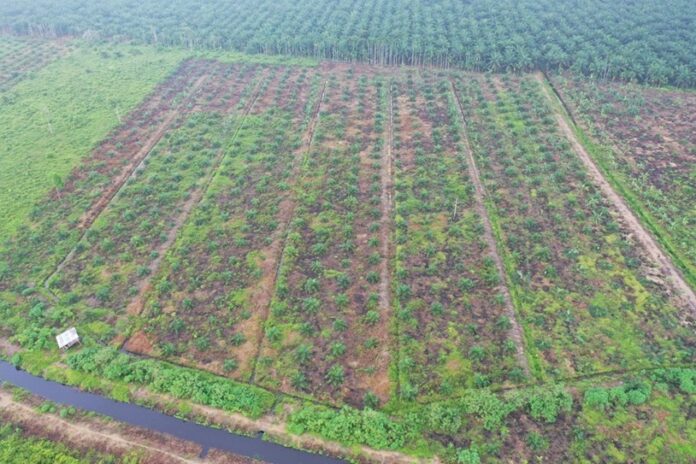
Avoided deforestation projects seek to prevent forest loss by addressing the social and economic pressures that drive land clearing. Carbon credits are one mechanism for channeling private finance into such projects.
Demand for avoided deforestation credits has weakened in recent years. Retirements of such credits peaked at nearly 61 million in 2021 before falling to about 35 million in 2025, amid concerns over over-crediting and the credibility of some projects.
Isometric said the new protocol will focus on projects that prevent unplanned deforestation and forest degradation, including those driven by unauthorized agricultural expansion and illegal logging, rather than forest clearance that has already been legally authorized.
The protocol will introduce three key features to address concerns over the integrity of avoided deforestation credits: dynamic baselines, a 100% assumed leakage rate and requirements to address the root causes of deforestation.
Under the dynamic baseline approach, project baselines will be calculated using real-world control areas and recalculated at each credit issuance. Isometric said this is intended to prevent credits from being issued against outdated projections of deforestation risk.
The protocol will also assume 100% leakage by default. Leakage refers to the risk that deforestation prevented by a project is displaced to another area. The assumption can be reduced only when project developers demonstrate and monitor that deforestation has not shifted elsewhere.
The third feature focuses on root causes. Developers will be required to demonstrate that the economic and social pressures driving communities to clear land have been addressed in partnership with those communities before credits are issued.
The protocol is being developed by Isometric’s in-house Science Team, with input from its independent Science Network, which includes more than 400 academic experts.
Isometric plans to open the protocol for public consultation by November 2026, before finalizing it and allowing projects to begin certification.
Isometric currently works with 35 project developers across reforestation, mangrove restoration, improved forest management, improved soil management and agroforestry.
The company said its expansion into avoided deforestation builds on its work in nature-based carbon removal and its use of technology to accelerate certification and verification processes.
In August, Mombak delivered its first carbon removal certificates to the Symbiosis Coalition, two years ahead of schedule, supported by Isometric’s AI-powered Certify platform.
The new avoided deforestation protocol has also received input from researchers.
Dr. Tom Swinfield, Associate Professor at the University of Cambridge and Chair of the Scientific Council at Haven, said the use of dynamic baselines based on real-world evidence and stronger safeguards against leakage could strengthen the measurement of avoided deforestation projects.
Prof. Ed Mitchard, Co-founder and Chief Scientist of Space Intelligence, said Isometric’s approach differs from existing REDD+ methodologies by comparing project areas with matching sites after the fact rather than fixing a baseline in advance of each monitoring period.
Support for the new protocol is also coming from project developers.
Revalue, which develops carbon reduction projects across multiple jurisdictions, is transitioning its future portfolio projects to Isometric’s protocol. Its portfolio covers millions of hectares of forest globally.
“Revalue has been leading the development of scientifically rigorous reductions credits,” Revalue Founder and CEO Stuart Rowland said.
“We believe Isometric’s new protocol is a game changer for reductions credits, bringing their scientific rigor in line with removals,” he added.
Imperative, an ecosystem restoration and management company, is also developing forest conservation projects that are expected to be certified under the new protocol. ***