

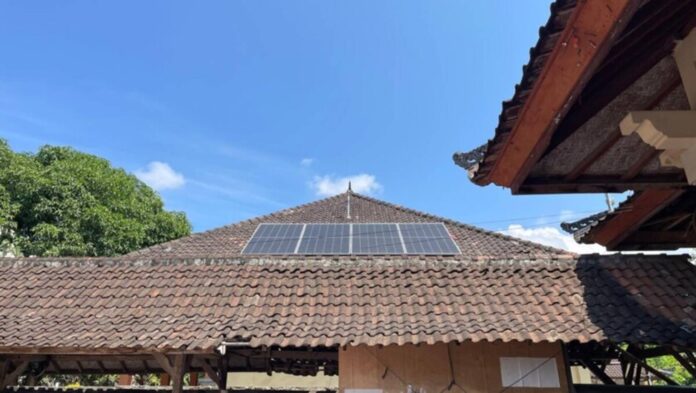
Ecobiz.asia – Replacing diesel-fired power generation with solar photovoltaic (PV) systems and battery energy storage could save Indonesia up to Rp17.2 trillion, while creating an emerging investment opportunity in remote power systems, according to the Institute for Essential Services Reform (IESR).
Abraham Octama Halim, Research Manager for Energy Modelling and Power System Analysis at IESR, presented the findings during the Indonesia Sustainable Energy Week (ISEW) 2026 in Jakarta on Wednesday (August 19, 2026).
IESR estimates that electricity generated from solar PV combined with battery energy storage systems (BESS) now costs around one-third of diesel generation. The cost advantage is particularly significant in remote and outer-island areas, where diesel generation is expensive because of fuel transportation and high operating costs.
The gap in electricity production costs, or BPP, compared with Java reaches around Rp200 per kWh in Sumatra, Rp900 per kWh in Sulawesi, Rp1,213 per kWh in Maluku, Rp1,300 per kWh in West and East Nusa Tenggara, Rp1,605 per kWh in Kalimantan and Rp1,800 per kWh in Papua, according to IESR.
The institute said the economics of replacing diesel generation have improved as solar and battery costs have declined. Hybrid systems that combine solar and batteries with existing diesel plants could reduce fuel consumption while providing more predictable generation costs.
IESR also sees the diesel replacement market as a potential investment opportunity. Its analysis found that solar-battery hybrid projects could generate internal rates of return (IRRs) of more than 12%, depending on plant size, fuel prices and technology costs.
For larger sites with high diesel consumption, IESR estimates returns of around 12%. Such projects, however, require significant upfront capital, with battery investment in some scenarios approaching US$1.8 million (Rp32.1 billion) per site.
Smaller systems with higher diesel costs could offer returns of around 15%, while another project segment analysed by IESR could generate IRRs of up to 19% as solar and battery costs decline.
The varying returns could create opportunities for different types of investors, ranging from international independent power producers and infrastructure funds to mid-sized developers, private equity firms and local investors.
The economics are also reflected in individual projects. An IESR case study of the Muara Pantuan diesel power plant in Kutai Kartanegara, East Kalimantan, found that integrating solar and battery storage could reduce generation costs by as much as 53%.
IESR said diesel replacement could therefore develop into a distinct investment segment rather than remain limited to government-led electrification programs, particularly in areas where high diesel costs make solar and storage commercially competitive.
Beyond reducing generation costs, wider deployment of solar-battery systems could also help reduce the fiscal burden associated with supplying electricity to remote areas, while supporting Indonesia’s broader expansion of solar power. ***