
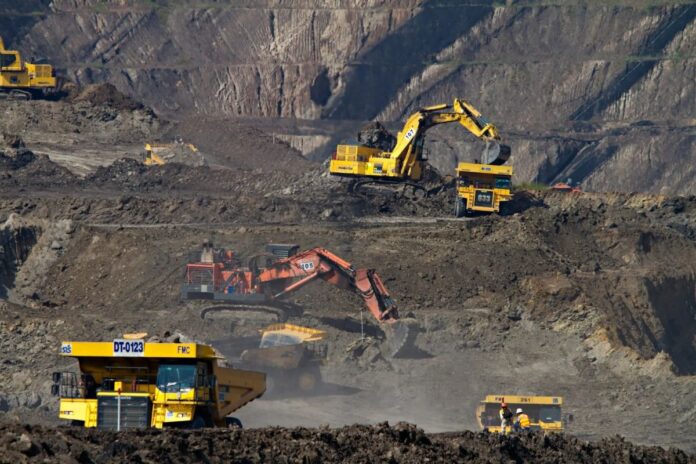
Ecobiz.asia — Indonesia has stepped up cooperation with international partners to strengthen environmental and social practices in the mining sector, particularly nickel, as part of efforts to promote responsible and sustainable mining amid rising demand for critical minerals.
The cooperation was highlighted during the final presentation of a joint technical assistance programme on environmental and social aspects of nickel mining, held in Jakarta from February 10 to 12, 2026.
The programme involved the Agence Française de Développement, the French Geological Survey (BRGM), and Indonesia’s Directorate General of Mineral and Coal, working in coordination with Badan Geologi, both operating under the Ministry of Energy and Mineral Resources.
The activity forms part of the Indonesia Energy Transition Facility (IETF), a €14.7 million technical assistance programme co-financed by AFD and the European Union and implemented under the Global Gateway framework.
The programme marked the conclusion of activities launched in 2025, including a technical seminar on international best practices for responsible mining and a predictive mapping of nickel resources in Southeast Sulawesi that integrates environmental and social exclusion zones in line with Indonesian regulations.
Indonesia holds some of the world’s largest reserves of nickel and cobalt, minerals considered essential for the global energy transition. As demand for these resources continues to rise, authorities are seeking to ensure that mining development balances economic growth with environmental protection and social safeguards.
Around 30 participants from government agencies, research institutions, and civil society organisations took part in the three-day seminar. Discussions focused on regulatory frameworks, international benchmarks, and the integration of environmental and social considerations into mining planning, licensing, and oversight.
AFD Jakarta Director Yann Martres said sustainable mining must be embedded across the entire value chain, from extraction to downstream development.
“AFD’s ambition is to support a just and sustainable energy transition through an integrated approach across the entire value chain,” he said, adding that environmental and social considerations should be integrated from the early stages of mining projects.
European Union Ambassador to Indonesia Denis Chaibi said the EU supports Indonesia’s efforts to align mining practices with international standards to mitigate environmental and social risks while enhancing competitiveness.
“The Indonesia Energy Transition Facility is paving the way for clean investments in Indonesia, an EU priority under the Global Gateway,” he said.
Meanwhile, French Ambassador to Indonesia Fabien Penone said France supports Indonesia’s ambition to strengthen downstream processing and local value addition in the mining sector.
“Drawing on its long-standing experience in mining governance and industrial development, France is committed to supporting Indonesia in building a responsible, clean and competitive mining industry,” he said.
BRGM Asia Director Olivier Frézot said measuring environmental and social impacts should be viewed as a strategic decision-making tool rather than a constraint.
“It helps steer mining projects toward more sustainable options, limiting risks and maximizing benefits for all stakeholders,” he said.
Directorate General of Mineral and Coal official Dedi Supriyanto said the seminar aims to produce a public policy brief to support mining planning that balances economic development, energy transition needs, and the protection of ecosystems and local communities.
“The rapid expansion of mining activities justifies the establishment of mining exclusion zones and robust territorial governance instruments,” he said.
The initiative reflects broader cooperation between Indonesia and its international partners under the Just Energy Transition Partnership (JETP) to promote responsible mining, environmental protection, climate resilience, and sustainable value creation. ***